


New Conflict Resolution and Negotiation Program Launched

Considering the fact that humans are born with two ears, one might think that people would do a better job of listening to one another, especially when discussing important public health and health care controversies. Yet sometimes these kinds of discussions can quickly degenerate into polarized debates of who's right and who's wrong with little room for agreement.

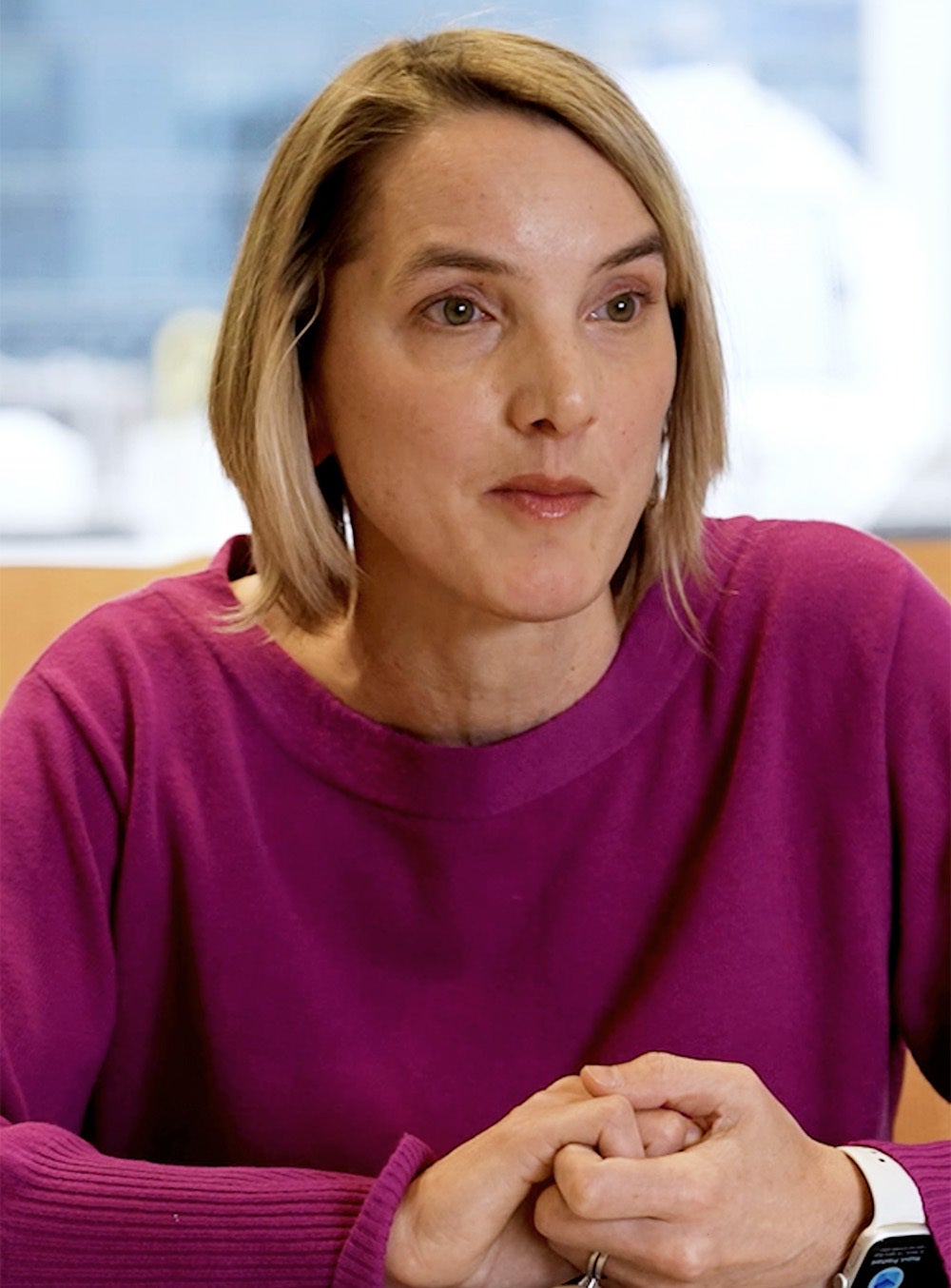
HSPH lecturer Leonard Marcus hopes to change the nature of public health debates by offering a third-party forum in which parties can not only discuss the issue before them but also reach a substantive agreement by the end of their session. Marcus serves as the director of a new program at HSPH, the Public Health Conversations Initiative (PHCI). The initiative is part of the Program for Health Care Negotiation and Conflict Resolution at the Division of Public Health Practice. Barry Dorn, instructor in the Department of Health Policy and Management, serves as associate director.

"My hope is that HSPH, through the Public Health Conversations Initiative, will be further regarded as something of a 'little Switzerland' among the debates and controversies swirling around public health issues," said Marcus. "Certainly, many people within our community have been vocal activists on behalf of public health issues, and that activism has generated its own controversies, and that has been great. PHCI simply adds another dimension to our work on behalf of a better understanding and a more active strategy for improving the public's health."

Marcus first envisioned the initiative three years ago after having spent many years in the field of conflict resolution. He is lead author of a book called Renegotiating Health Care: Resolving Conflict to Build Collaboration. He said he saw a need to offer a neutral forum to parties grappling with difficult public health issues.

In his experience as a mediator, Marcus was particularly struck at how poorly people listen to one another when they are engaged in a debate. He remembered a meeting between environmentalists and corporate representatives in which one of the environmentalists ceded an important point.

"I looked at the representative of the corporate side, and there was no response," said Marcus. "I asked him if he had just heard what had been said, and he answered, 'No'. He couldn't hear what was being said because it wasn't what he expected to hear. If we can only hear the expected, we will never be able to forge new understandings. It was as if they were speaking different languages."

Marcus suggests that sometimes people get so caught up in countering a statement or planning the next thing they will say that they miss entire points made by the other party at the table.

Through PHCI, interested representatives from organizations meet at a neutral venue. Once there, faculty from the Program for Health Care Negotiation and Conflict Resolution use a four-step approach of problem solving to help them reach an agreement by the end of the meeting. The agreement can be formalized by the creation of a document or left as a more intangible recognition of progress reached through the meeting. Most sessions are expected to last one day, though longer meetings can be arranged.

"The purpose of the conversation is to build a consensus," said Marcus. "It could be a consensus of understanding or likewise a consensus of action. Whatever the planned purpose, the intent is to give people a rare opportunity to engage with one another in constructive dialogue for the purpose of putting the process of persuasion clearly on the table."

Newly created in October, PHCI has already gained the interest of several groups, said Marcus, including some that want PCHI faculty to lead them in a discussion about community-based AIDS programs interacting with faith-based organizations. Marcus anticipates that many different groups will be interested in using the initiative, including foundations, associations, corporations, consumers, and public agencies.

In addition to Marcus and Dorn, the PHCI faculty include Edward Dauer, visiting scholar at HSPH, Velvet Miller, instructor in the Department of Health Policy and Management, and Deborah Prothrow-Stith, director of the Division of Public Health Practice. For more information about PHCI, contact Program Coordinator Amy Brinn at (617) 496-0867 or e-mail: abrinn@hsph.harvard.edu. Or visit www.hsph.harvard.edu/php/PHCNCR/conversation.html.

PHCI Informational Meeting

PHCI is offering an informational meeting about the project on Tuesday, December 19 from 2:30 p.m. to 3:30 p.m. in Kresge G-2. Faculty, administration, staff, and students are encouraged to attend.


Around the School
is published weekly by the Office of Communications
Harvard School of Public Health
665 Huntington Ave., 1204
Boston, Massachusetts 02115
617-432-6052
Editor: Christina Roache
Photo Credits: Rachel Cunningham; Division of Public Health Practice


New Conflict Resolution and Negotiation Program Launched || Future of Environmental Health Takes Center Stage || HSPH Students Volunteer to Host "An Affair to Remember" for Mission Hill Seniors || Holiday Stress Packets Available || Exams and Defenses || Calendar


Archived Issues || HSPH Home


Copyright, 2000,  President and Fellows of Harvard College