


What's Wrong with this Pyramid?
New Epidemiology Chair Pushes Paradigms for Better Health

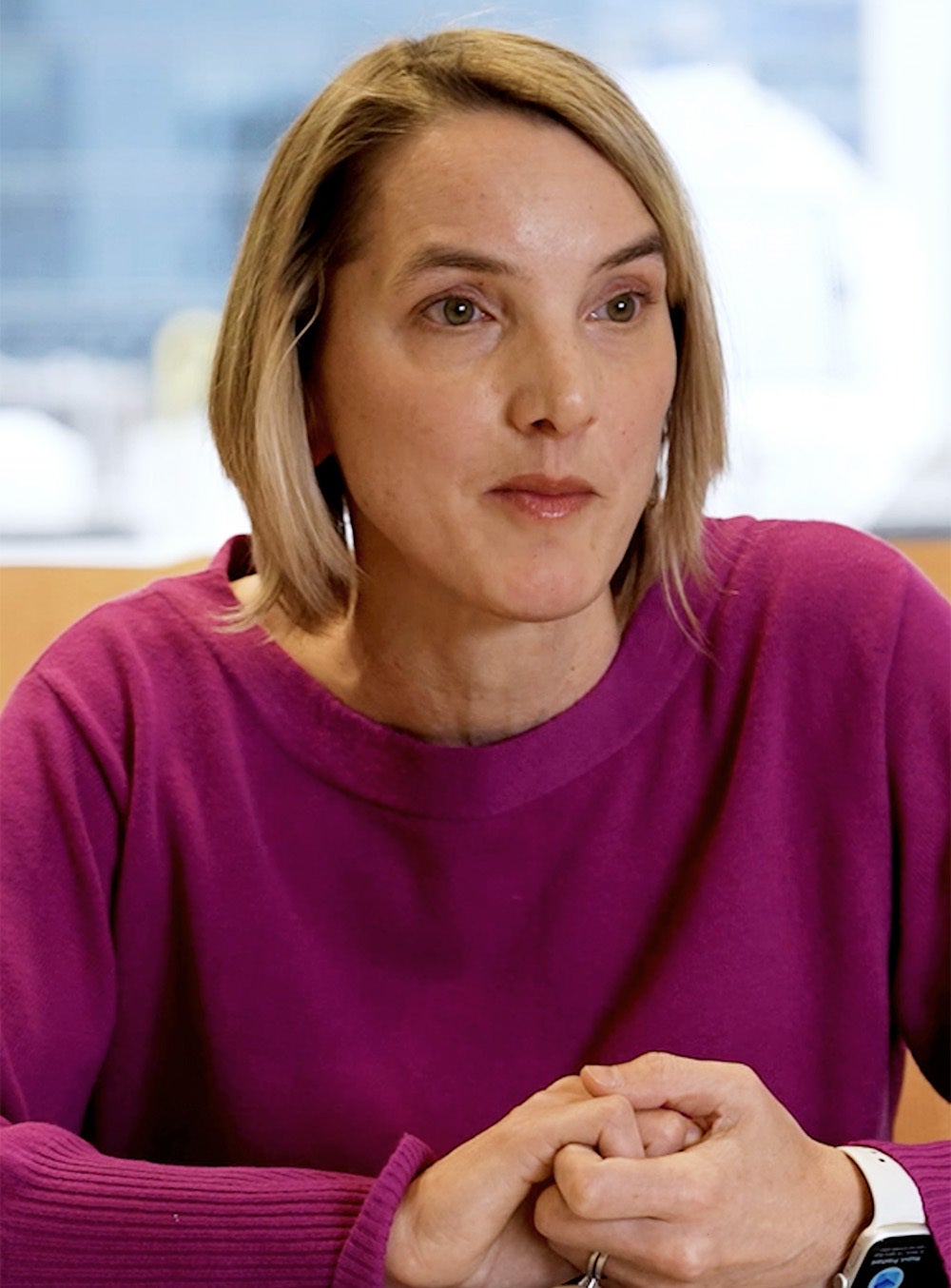
Last May, the Food and Drug Administration released revised dietary guidelines for Americans on which the well-recognized "food pyramid" is based. They didn't get it quite right, says Meir Stampfer, newly appointed chair of the Department of Epidemiology.

"They are better than the 1995 guidelines," said Stampfer, "but nowhere near as good as they could be."


If he had his way, Meir Stampfer would like to see these changes made to the food pyramid.

Stampfer should know. He was part of the 11-person committee invited to recommend the revisions. He attended meetings, voiced his opinion, and cast his vote as the members decided what advice to give a country struggling with increasing obesity rates and an international reputation for an unhealthy diet.

The new guidelines emphasized eating grains, vegetables, and fruits and, for the first time, described ways in which to keep food safe to eat. All good things. But there are some other items that concern Stampfer. For one thing, the guidelines promote overconsumption of carbohydrates, he said. The rationale is that when people eat more breads and other sources of carbohydrates, they eat less fat.

"But not all fat is bad," said Stampfer. "Trans-fat is bad. Saturated fat is bad. But unsaturated fat can be good. It can lower the amount of bad cholesterol in the bloodstream."

Stampfer said the current recommended limitations on unsaturated fat have no scientific basis.

And while the committee overemphasized fat intake, it underemphasized the dangers of refined carbohydrate and sugar consumption, he said.

"Americans eat way too much sugar," he said, but advice to curb the intake was watered down first by the committee and then by the US Department of Agriculture, which may have felt pressured by the soft drink industry, he noted.

Stampfer said some of the committee members were reluctant to change the guidelines too much for fear the alterations would confuse the public.

"It's an old-style way of thinking," said Stampfer, "even though I pointed out that we were supposed to be modifying the guidelines."

The next revised set will come out in 2005, and Stampfer said he would be happy to serve on the committee again but doubts he will be invited.

"I'll be astonished if they invite me back," laughed Stampfer. "I was a squeaky wheel on the losing side of most of the votes."

Squeaky wheel makes good
Stampfer has made a career out of being a squeaky wheel. A professor in the Departments of Epidemiology and Nutrition, he first came to HSPH in 1979 with a powerful desire to help people prevent diseases before they started. Just three years out of medical school, he successfully applied to HSPH, earned his doctoral degree, and quickly found himself at the center of controversy.

Part of his doctoral dissertation was about estrogen and risk of heart disease in women, and he used his thesis to publish a paper in the New England Journal of Medicine in 1985 suggesting that estrogen therapy reduced the risk of coronary heart disease.

In the very same issue was a paper from another group of researchers whose conclusions conflicted directly with his findings. So Stampfer followed up and in a big way. For 10 years, he studied more than 48,000 postmenopausal women who participated in the Nurses' Health Study and did not have a history of cancer or cardiovascular disease. He confirmed his 1985 work--that estrogen use is associated with reduced incidence of coronary heart disease as well as mortality from cardiovascular disease, but not with any change in the risk of stroke.

Epidemiologist at work
Now, less than 16 years after receiving his doctoral degree, Stampfer is the chair of the Department of Epidemiology. He has worked closely with HSPH researchers Walter Willett and Frank Speizer on a number of important studies. He has co-authored more than 400 original research papers and, according to the Institute for Scientific Information, his papers have been cited by other scientists more often than those of any other epidemiologist in the 1980s and 90s.

From the same sense of curiosity that has prompted his research, Stampfer recently sought a more personal document he wrote years ago--his original application to HSPH in which he described his blossoming hope of making people healthier. In it, he wrote, "My primary concern and interest in medicine is preventive medicine, which is clearly the most humane and effective approach to promoting health and combating disease."

Said Stampfer today, "I read it and thought, I am saying the same things now as I said back then--I want to expand the areas in which preventive medicine makes a difference."

In his years as a researcher, Stampfer has exemplified the tenets of his essay. He has been involved in some of the most important epidemiological projects in recent memory, helping to initiate the Physicians' Health Study in 1981, the Health Professionals Follow-up Study in 1986, and the Nurses' Health Study II in 1998.

"Meir is really one of the outstanding epidemiologists in the country," said Timothy Byers, professor of preventive medicine and biometrics at the University of Colorado School of Medicine. "He is regarded as one of the solid thinkers and leaders in the US."

Changing the field
Stampfer has focused on epidemiology and chronic diseases. In July he published a paper in the New England Journal of Medicine in which he said that women who exercise, eat healthily, and don't smoke can dramatically reduce their risk of coronary heart disease.

"While we know that diet and lifestyle can affect risk of heart disease, most studies have focused on individual risk factors," said Stampfer. "We studied the impact a combination of individual behavioral risk factors has on heart disease risk, and found that 82 percent of heart attacks were attributable to failure to follow a healthy lifestyle that includes exercise, good eating habits, and abstinence from smoking."

In 1991, at a time when most researchers were focusing on total cholesterol as a risk factor, Stampfer and his colleagues provided strong evidence for the differentiation between good and bad cholesterol. Stampfer showed that a form of cholesterol called high-density lipoprotein actually reduced the risks of heart disease.

"People had looked at this area before, but our data was persuasive," said Stampfer. "In retrospect, I think it marked a turning point in the field because it got people looking in another direction."

He followed with another important paper one year later. By studying blood samples from participants in the Physicians' Health Study, Stampfer linked high levels of a substance called homocysteine to a tripled risk of heart attack. Researchers had long suspected that homocysteine damages blood vessels. Here was the first prospective study that came with a fairly easy prevention message--eat less meat and more vitamin B.

"Homocysteine had been on the periphery of the field," said Stampfer. "There was some modest data floating around, but no one had done a prospective study until ours."

Researchers today continue to investigate the effects of homocysteine, which has recently been implicated in miscarriages and Alzheimer's disease.

"Meir is clearly one of the preeminent epidemiologists around today," said Arthur Schatzkin, chief of the nutritional epidemiology branch at the National Cancer Institute. "His work is not only important from a substantive point of view but also because he has helped keep these large cohort studies at Harvard going."

Stampfer has eased some of the guilt of women who drink moderately. Previous work by other scientists had indicated that moderate drinking reduced the risk of heart disease in men, and Stampfer confirmed this finding in women by conducting the first large prospective study of alcohol and cardiovascular disease in women.

"That study was pretty controversial when it was published because people were afraid that information would be used by industry or individuals to promote alcohol misuse," said Stampfer. "When I presented it at a meeting, people were almost yelling at me, trying to pick apart the data--which of course is what good science is about. And over the years, more and more evidence has substantiated our data."

Teaching the next generation
Although Stampfer has nurtured a deep interest in research, he said that guiding doctoral students and junior faculty has been one of his biggest sources of satisfaction. Reading the list of his former and current students is like reviewing a roll call of some of the brightest young minds in the field.

Stampfer's first doctoral student was Eric Rimm, who is now an associate professor of epidemiology and nutrition in the Department of Epidemiology and a well-established researcher in his own right.

"Meir has been a tremendous contributor to the field, and his training of students and post-docs has been unique," said Rimm. "He is very unselfish with his work."

Other former students and fellows who have remained at HSPH are Alberto Ascherio, associate professor of nutrition and epidemiology, Fran Grodstein, assistant professor of medicine and epidemiology, and Frank Hu, assistant professor of nutrition and cardiovascular disease. Stampfer has mentored eight researchers now at HMS and one doctor who chaired a department at the National School of Public Health in Spain.

Stampfer said he wants to broaden the scope of the Department of Epidemiology and build on the good work that has already come from its researchers. If past is prologue, then one can expect some paradigms to shift.

"I think any time that you make an advance, you have to question the current thinking," said Stampfer. "I never set about challenging the prevailing wisdom as a goal, but I try to be open-minded about the data."


Around the School
is published weekly by the Office of Communications
Harvard School of Public Health
665 Huntington Ave., 1204
Boston, Massachusetts 02115
617-432-6052
Editor: Christina Roache
Photo Credits: Richard Chase, MASCO/CommuteWorks


What's Wrong with this Pyramid? || In Memoriam || HSPH Researchers Receive Awards || Lecturer Appointed || Scoop Fest Dishes Out Summer Relief || Ice Cream Party to Reward HSPH for Bike Challenge || Exams and Defenses || Calendar ||


Archived Issues || HSPH Home


Copyright, 2000,  President and Fellows of Harvard College