|
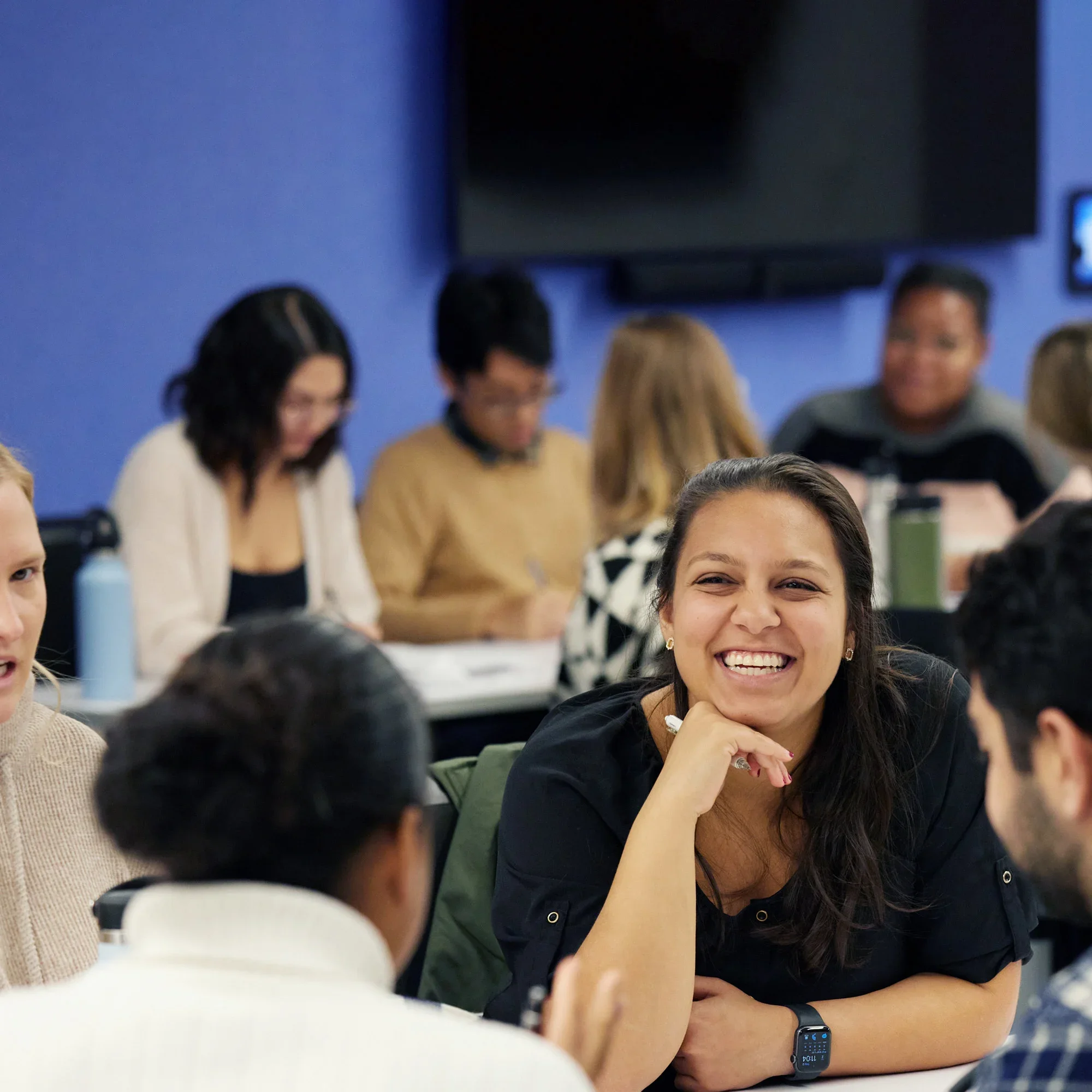
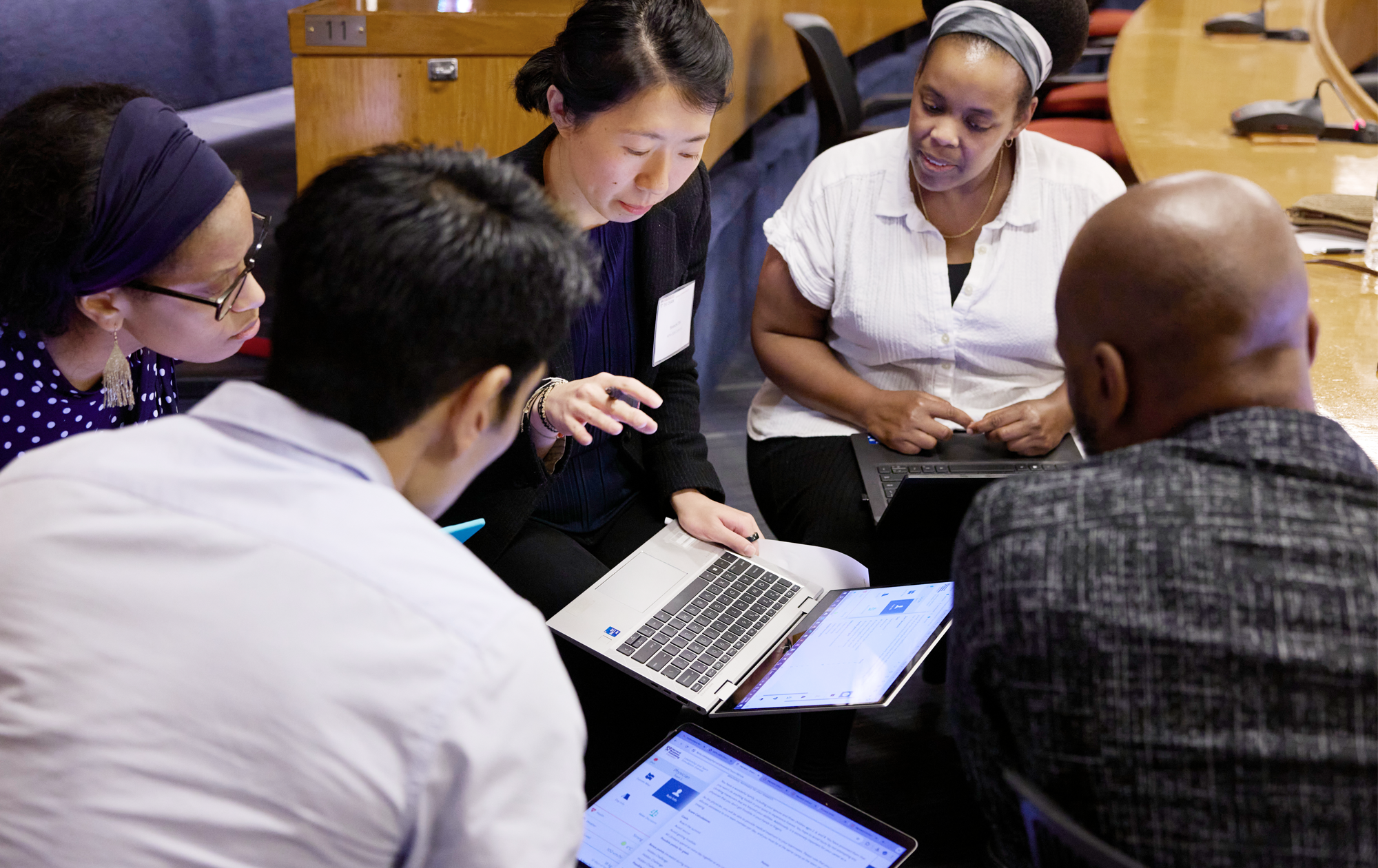
Teachers Go Back to School in Search of Better Way to Impart Science This just looked like more fun than should be allowed at an academic institution. Gathered in a room in Building 1 on February 15 were seven adults spinning black-and-white tops on a long tabletop. The adults, all local grade-school teachers, already knew the lesson. But what they were learning was how to teach fundamental physiological concepts with a flair that kids would remember. The workshop was the third in a series of four offered at the school for science teachers. Organized by Marshall Katler, research specialist in the Department of Environmental Health, with assistance from faculty and staff, the workshops each focus on one topic and provide examples of how it can be demonstrated to kids. The first two workshops covered microorganisms and animals and plants respectively. The February workshop tackled the senses. The final workshop will be on the environment. In addition to the demonstrations, the teachers are given large packets of information about the topics, sample lesson plans, and websites from which more resources can be downloaded. This year's participating teachers came from the Hale, Mission Hill and Farragut schools, all in Boston. "It's good to get a deeper base of knowledge and then figure out how to apply it in the classroom," said Lila Moran, a third-grade teacher from the Hale School. The workshops developed from the Environmental Health Education Program that started 12 years ago in the Department of Environmental Health. By 1993, Katler was visiting local schools every other week to teach lessons and manage field trips. Last year, he developed the workshops with a grant from the Boston Annenberg Challenge Fund for Nonprofits and then assisted the Tobin School with changing the way the instructors taught science there school-wide. "We're trying to show that more can be done to teach science," said Katler. He added that many elementary-school teachers are overburdened with other academic priorities. Science education is sometimes overshadowed by literacy and math courses, he said. He also urged the teachers to share what they learn at HSPH with their
colleagues.
|
|
Around the School HSPH Researcher Kuntz Simulates Disease Trends with Massive Mathematical Models || Teachers Go Back to School in Search of Better Way to Impart Science || Career Fair || Intern with NGOs this Summer || Exams and Defenses || Calendar
|