
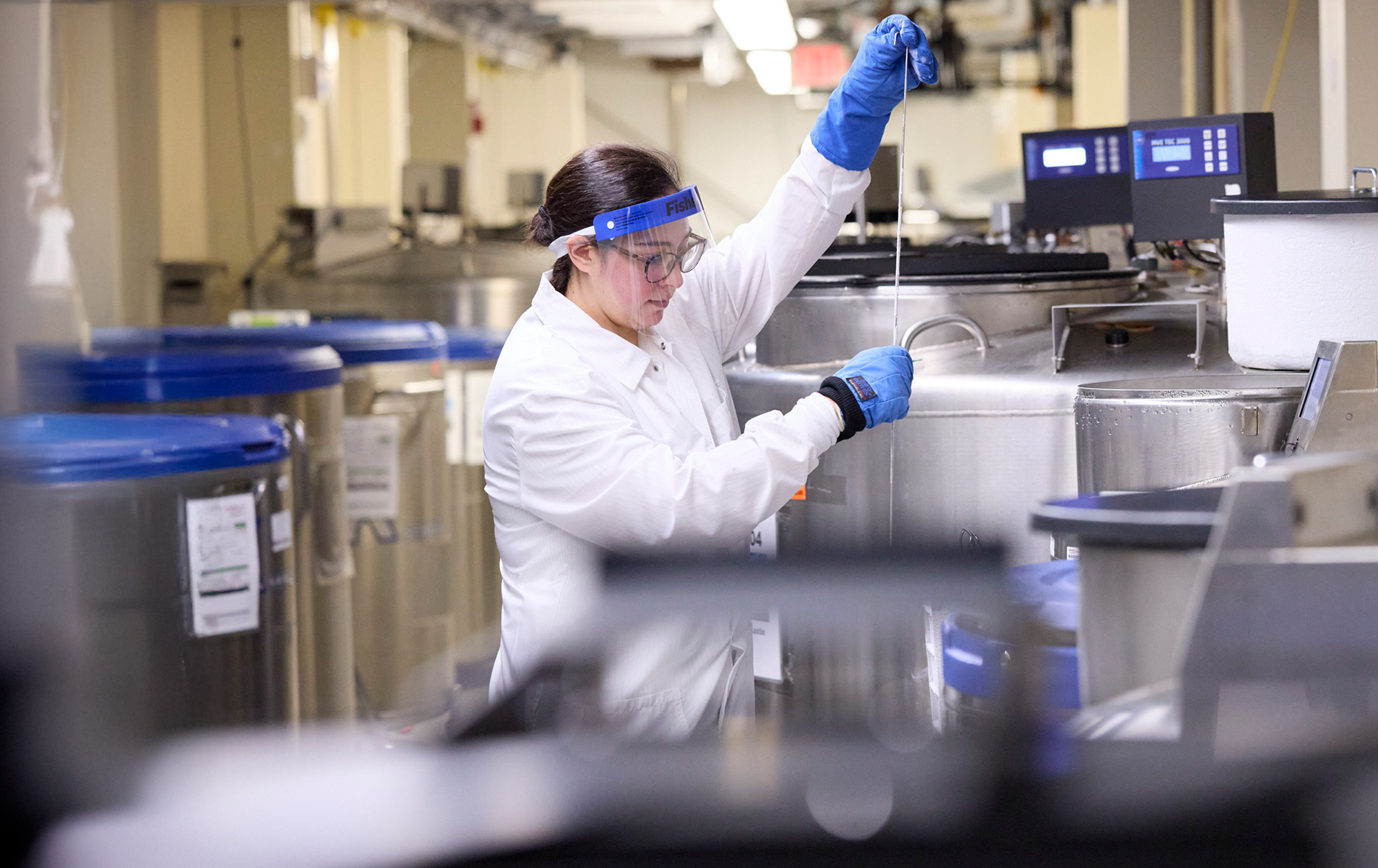


Completed in the beginning of 2002, the Botswana-Harvard HIV Reference Laboratory is a state-of-the-art research facility of a caliber and scale currently unmatched in Africa. Located on the grounds of the Princess Marina Hospital in Gaborone, this three-level, 2,300-square meter (25,000 sq. ft.) laboratory is dedicated to work that will help stem the HIV/AIDS epidemic in Botswana. The Reference Laboratory serves as the central facility for processing and testing of clinical specimens, monitoring changes in the regional HIV epidemic and research studies conducted by the Partnership. From current research on HIV antiretroviral therapy to future testing and monitoring of HIV vaccine trials, the Botswana-Harvard HIV Reference Laboratory is equipped to conduct cutting-edge techniques in HIV research for Botswana and southern Africa.
 |
| Research Assistant Gaseene Sebetso preparing specimens for viral load analysis |
Daily, hundreds of specimens arrive and are processed for testing within the facility. The tests conducted include: qualitative HIV diagnosis by serology (ELISA and Western Blot) and by PCR (for infants), CD4 cell counts, quantitative viral load measurements, and blood chemistry and hematology assessments. These tests are conducted with automated instruments designed for accurate high volume testing. The results of these assays are used to determine HIV infection and to monitor disease progression, which serve an important role in the clinical care of patients on antiretroviral therapy.
Also within the building is a large laboratory dedicated for sophisticated molecular research of HIV, as well as a BL3 facility for virus isolation and culture. Equipment in this laboratory includes a DNA sequencer, quantitative PCR machines, ELISPOT readers and scintillation counters for cytotoxic lymphocyte assays, a 4-color flow cytometer for intracellular staining and other immunological analysis, and facilities for cloning and protein analysis. These highly sophisticated machines and techniques allow scientists to unravel and understand the molecular structure of HIV, its pathogenesis, and the nature of our immunity to the virus, which together, translate into effective, Botswana-specific HIV treatment and prevention programs.
 |
Research Assistant Keabetswe Bedi works with specimens in the BL3 facility
|
In addition to its research role, the Laboratory serves as a training facility, helping to build the professional infrastructure of Botswana by training the nations future researchers and laboratory technicians. As expressed by His Excellency President Festus Mogae, "this laboratory stands as a tangible example of this Partnership, and it forges a permanent link between health and education, two sectors that are pivotal in our fight against the HIV and AIDS epidemics".
The vision and dedication which created the Botswana-Harvard HIV Reference Laboratory represent an unprecedented step forward for the people of Africa. The Laboratory signifies the direction of Botswana, and other African nations, towards becoming self-sufficient in conducting HIV research, as well as developing the scientific and health care capacity necessary to effectively prevent the spread of HIV, and to improve the quality of life of those living with HIV and AIDS.
|