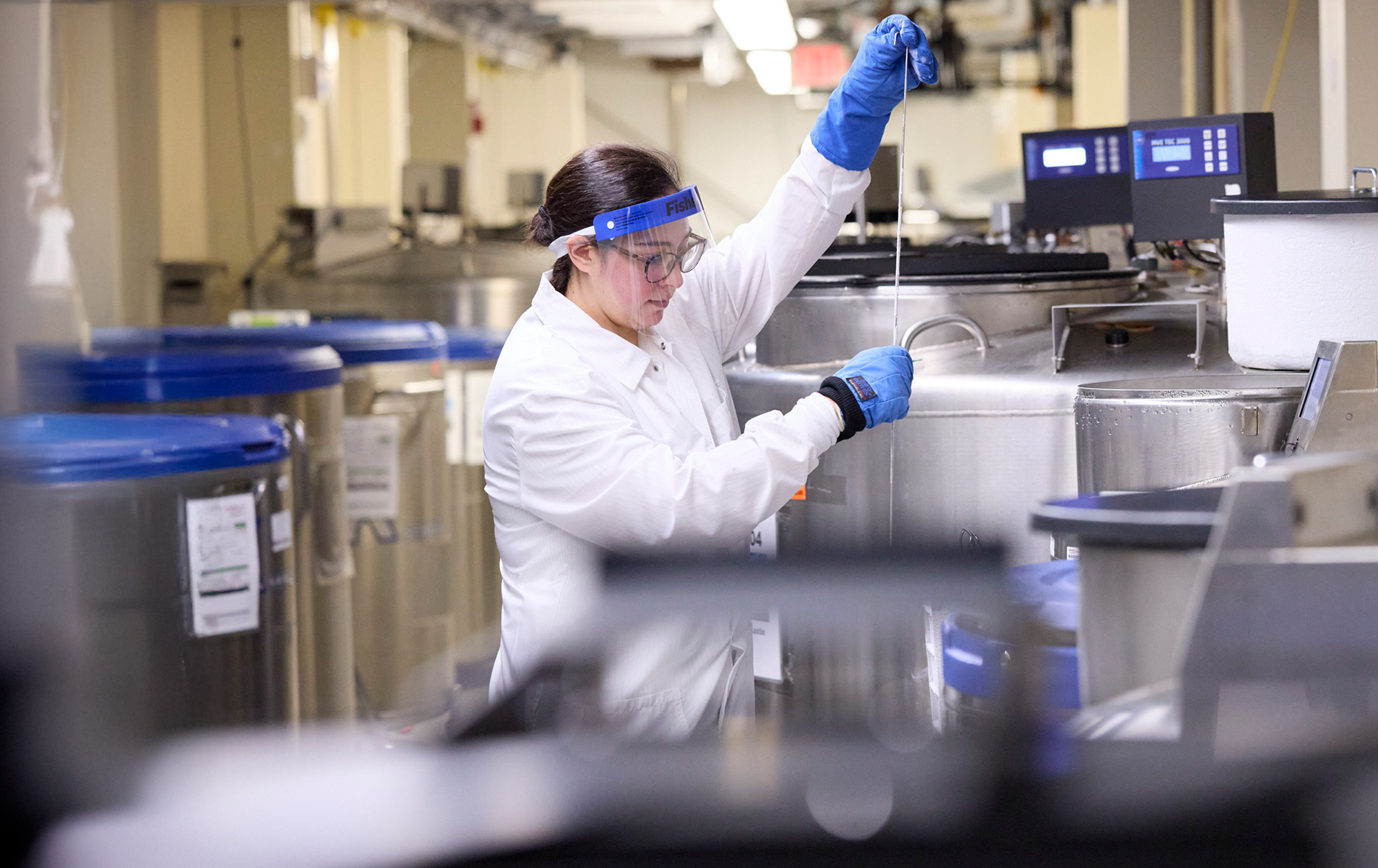


Radiation Safety Officer Training for Laboratory Professionals
June 8–12, 2009
Boston, Massachusetts
Register for 2009
Download the 2009 Brochure
Scholarships Available!
Don’t let a weak economy keep you from obtaining the need-to-know changes in the field of radiation safety. Let the experts at the Harvard School of Public Health keep you abreast of the latest industry changes and best practices during three upcoming training programs.
This program is a unique training experience providing the perspectives and experiences of laboratory radiation safety officers and agreement state regulators!
One of a Kind Program
There is no other single program available in the U.S. that specifically trains individuals
for the radiological safety issues faced by the biotechnology, university, hospital, and medical
laboratory.
This is a fundamental 40-hour training program designed to prepare researchers and safety officers
with the necessary skills to implement a radiation protection program in a biotechnology, university,
hospital, or medical laboratory and comply with NRC and Agreement State regulations regarding the
use of radionuclides.
There are thousands of small biotechnology, university, hospital, and medical laboratories
throughout the country that use radionuclides in their research and clinical practice. Each of these
institutions is required to appoint a qualified Radiation Safety Officer (RSO) to oversee the use,
application, monitoring, and disposal of radionuclides. The person occupying this
position must meet the training and experience qualifications specified in licenses issued by the NRC
or Agreement States.
This program will focus primarily on the radionuclides most commonly used in biotechnology, hospitals, and medical facilities
(i.e., C-14, H-3, S-35, P-32/33, Ni-63, Tc-99m, and radioiodines), as well as the techniques used to assay these radionuclides in
laboratory radiation safety surveys.
Practical Format
- Practical applications (not theory) focusing on lessons learned through experience better prepare you to meet your responsibilities and reinforce the lecture
- Hands-on, laboratory exercises highlight applications of hand-held instruments and liquid scintillation counting
- Interaction with highly experienced university, medical, and biotechnology RSOs in an informal learning environment
- The software applications used are invaluable “tools of the trade”
New in 2009
Customize your training by adding optional sessions that appeal to your interests and needs. Optional sessions will be offered Tuesday through Friday after regular class for an additional fee. Topics include: Laser Hazard Assessment, Advanced Internal Dosimetry, Hand-Held Instruments Practical, Medical Health Physics, and more.
Who Should Attend
- People who want to be Radiation Safety Officers in a university, biotechnology center, or medical facility
- Laboratory staff scientists who need radiation safety training to qualify as a "user" of radionuclides
- Biotechnology scientists who use radionuclide tracers
- Scientists in the radiopharmaceutical industry (production and R&D)
- Physicians and medical staff who use radionuclides in the healing arts
- Laboratory staff (all fields) who use radionuclides
Upon Completion Of This Program Participants Will Be Able To
- Possess Radiation Safety Officer skills specific to the biotechnology, university, hospital, and medical laboratory environments
- Avoid regulatory compliance problems and maintain a safe laboratory environment
- Assess and discuss risks of radiation and biological effects with employees
- Possess the tools of health physics practice applied to laboratories
- Manage and document radiological effluents and waste streams associated with biotechnology research laboratories
- Know what the regulators require and expect you to provide to demonstrate compliance with a radionuclide permit and license requirements
Program Director
Edward F. Maher, ScD, CHP
Associate and Senior Health Physicist
Dade Moeller & Associates, Inc.
Faculty
Christopher B. Martel, MS, CHP
Director, Radiation Safety Officer
Health Physics
Brigham and Women's Hospital
Nicholas M. Panzarino, MS, CHP
Senior Health Physicist
Dade Moeller & Associates, Inc
Joseph P. Ring, PhD, CHP
Radiation Safety Officer
Associate Director, Radiological Services
Department of Environmental Health and Safety
University Operations Services
Harvard University
James Rohrbacher, MS
Radiological Engineer
Wyeth Research, Inc.
Agenda
| Monday, June 8, 2009 | |
| 8:00 am |
Registration and Continental Breakfast |
| 8:30 | Welcome and Program Objectives and Overview — Maher |
| 9:00 | Atomic Structure and Radioactivity — Panzarino |
| 9:45 | Radiation Quantities and Units — Panzarino |
| 10:30 | Refreshment Break |
| 10:45 | Radiation Interaction with Matter, Types, and Sources of Radiation — Maher |
| 11:15 | Biological Effects of Radiation, Understanding Risks of Radiation — Maher |
| 12:00 pm | Lunch |
| 1:00 | Risks to the Pregnant Worker, Radiation Risk Communication — Maher |
| 2:00 | Radiation Exposure Control: Time, Distance, and Shielding — Panzarino |
| 3:00 | Refreshment Break |
| 3:15 | External and Internal Dosimetry: Regulatory and Other Practical Considerations — Panzarino |
| 5:00 | Sessions End / Reception at HSPH for faculty, participants, and their traveling companions |
| Tuesday, June 9, 2009 | |
| 7:30 am | Continental Breakfast |
| 8:00 | Radiation Protection Standards, 10 CFR Parts 19 and 20 — Maher |
| 9:45 | Refreshment Break |
| 10:00 | Compliance with Effluents Release Limits (Air and Water) — Martel |
| 11:00 | Recordkeeping and Retention for Compliance Demonstration — Martel |
| 12:00 pm | Lunch |
| 1:00 | Preparing for License Inspections, Notice of Violations and Penalties's — Maher |
| 3:00 | Refreshment Break |
| 3:15 | Survey Documentation, Contamination Control, Good Practices, and Employee PPE — Martel |
| 4:45 | Skin Dose from Radioactive Contamination — Martel |
| 5:15 | Regular Sessions End |
| 5:45 | Optional Session: Medical Health Physics (Part 30) [New in 2009] — Martel |
| 7:45 | Optional Session Ends |
| Wednesday, June 10, 2009 | |
| 7:30 am | Continental Breakfast |
| 8:00 | Introduction to Liquid Scintillation Counting, Instrumentation, Standards, Quenching, and Instrument QA/QC — Ring |
| 10:00 |
Refreshment Break |
| 10:15 | Radiation Hazard Assessment, Instrument Surveys, Counting Statistics, Contamination Levels, Wipe Testing, and Documentation — Ring |
| 12:00 pm | Lunch |
| 1:00 |
Hand-Held Instruments and Surveys — Martel |
| 3:00 | Refreshment Break |
| 3:15 | Liquid Scintillation Laboratory Counting — Ring |
| 5:15 | Regular Sessions End |
| 5:45 | Optional Session: Liquid Scintillation Counting Practical [New in 2009] — Ring |
| 7:45 | Optional Session Ends |
| Thursday, June 11, 2009 | |
| 7:30 am | Continental Breakfast |
| 8:00 | Introduction to Radioactive and Mixed Waste Management, Status of National Radiation Waste Policy Act — Maher |
| 10:00 | Refreshment Break |
| 10:15 | Waste Minimization and Volume Reduction Practices, Waste Management Brokers and Service Vendors, Disposal — Maher |
| 12:00 pm | Lunch |
| 1:00 | Shipping of Radioactive Materials Regulations — Rohrbacher |
| 2:30 | Refreshment Break |
| 2:45 | Shipping and Transportation Incidents, the Procurement and Receipt of Radioactive Material — Rohrbacher |
| 4:00 | Inventory Control of Radioactive Materials; Response to Personnel Contamination Incidents — Rohrbacher |
| 5:15 | Regular Sessions End |
| 5:45 | Optional Session: Hand-Held Instruments Practical [New in 2009] — Martel |
| 7:45 | Optional Session Ends |
| Friday, June 12, 2009 | |
| 7:30 am | Continental Breakfast |
| 8:00 | Air Sampling for CHIPS — Panzarino |
| 10:00 | Refreshment Break |
| 10:15 | Employee Bioassay Programs — Panzarino |
| 12:00 pm | Lunch |
| 1:00 | Security and Protection of Radioactive Materials — Maher |
| 2:30 | Refreshment Break |
| 2:45 | Radiation Protection Audits, License Applications/Renewals, and Employee Training Programs — Maher |
| 4:00 | Program Evaluation and Closing — Maher |
| 4:30 | Regular Session Program Adjournment |
| 5:00 | Optional Session: Laser Hazard Assessment/Safety [New in 2009] — Maher |
| 7:00 | Optional Session Ends |
| Agenda is subject to change | |
| *Optional sessions are $125 each and all selections must be designated during registration. | |
Continuing Education Credit
- 5 Industrial Hygiene CM Points, American Board of Industrial Hygiene
- 32 CECs, American Academy of Health Physics
- 3.7 CEUs, Harvard School of Public Health (Additional CEUs will be added for participants of the optional sessions)
The CEUs earned in this program may be applied towards the following credits:
- Board Certified Safety Professional (CSP) Continuance of Certification (COC) Points
- Certified Hazardous Materials Manager (CHMM) Maintenance Points
- Construction Health and Safety Technician (CHST) Certification Maintenance Points
- National Registry of Radiation Protection Technologists (NRRPT) Maintenance Points
- Occupational Health and Safety Technologist (OHST) Certification Maintenance Points
- Other specialty CEUs may be available
The Harvard School of Public Health maintains an Education and Research Center (ERC), funded by the National Institute for Occupational Safety and Health (NIOSH).
Program Check-In
On the first day, please check in at:
Harvard School of Public Health
FXB Building
651 Huntington Avenue
Boston, MA 02115
617.384.8692
The program takes place at the Harvard School of Public Health, located in the heart of the Harvard Longwood Campus in Boston. Public transportation is also readily available to the city's many shopping districts, museums and restaurants. For directions, please click here.
Accommodations
The Courtyard Marriott, Brookline
40 Webster Street
Brookline, MA 02446
617.734.1393
$189/single/double occupancy + 9.7% tax
Rooms have been reserved at this reduced rate until May 8, 2009. Reservations should be made when you receive your registration and payment confirmation. Please mention the program name and the Harvard School of Public Health to receive the special rate. The Courtyard Marriott is approximately 1.8 miles from the program location. Accommodations include a daily shuttle trip to and from the program location.
What Participants Say
“I have attended various Radiation Safety programs in many different locations, but this is the first time I feel that I can apply the theories and information to my practical life."
— Mahmoud Al-Abedi
Nuclear Medicine Specialist ERSO
King Fahad Specialist Hospital
Damman, Saudi Arabia
“This course was excellent. The right amount of theory and practical information was represented by all instructors. The instructors were extremely knowledgeable in their fields and helpful in making the complex seem simple.”
— John McVeigh, MBA, CHO, RS
Director
The Randolph Board of Health
Randolph, MA
“Absolutely the RSO course of choice. A best-in-class review of radiologic safety concepts and principles that will foster further development of any RSO working within the laboratory environment.”
— Jason W. Cupp
Director, UCB Research Facilities
Cambridge, MA
Program Fee
$1,695 if payment received by March 13, 2009
$1,795 if payment received between March 14, 2009 and June 1, 2009
$1,895 if payment received after June 1, 2009
Optional sessions are an additional $125 per session
Program fee includes:
- Comprehensive take-home reference manual
- Continental breakfasts, lunches, and refreshment breaks
- Harvard School of Public Health certificate of attendance, recognizing the completion of 40 hours of RSO training
- Includes a companion CD-ROM containing all pertinent NRC and DOT regulations, NRC Regulatory Guides, NRC Regulations (NUREGs), as well as numerous references and software tools for the practicing RSO
- Reception
- Continuing education credit

Group Discounts Available: Register with a colleague and receive a 15% discount on each full tuition. Receive a 20% discount when three or more colleagues from your organization register. That means, when you participate with four colleagues, a fifth colleague can attend tuition free! This is an excellent professional development opportunity that can serve as a strategy-building retreat for your team.Please email us at contedu@hsph.harvard.edu or call us at
617.384.8692 for more information.
Partial Tuition Scholarships Available
Click here to learn more about scholarship offerings
Payment Policy
Payment must be made in US funds and received in order to process your registration. Payment by credit card is strongly preferred (Visa, MasterCard, AmEx). If paying by check, please make check payable to: Harvard School of Public Health-CCPE, and be sure the participants name is on the check. Note: Please do not make non-refundable flight arrangements until you have received confirmation from us.
Substitution/Cancellation Policy
Substitutions may be made without additional charge. All requests for substitutions or cancellations must be made in writing. Cancellation on or before April 17, 2009 will be issued a refund less a $150 administrative fee per person. Cancellations received between April 18, 2009 and May 15, 2009 will be issued a refund of 50%. After May 15, 2009, no refund will be issued. There will be no exceptions to this policy.
Ways to Register
- To register online simply check off the items below and click Register Now.
- Call 617.384.8692 and register over the phone. You may also call this number for any registration questions you may have.
- Print the PDF Registration Form and fax it to 617.384.8690 with credit card information.
- You may also fill out, print and mail the form with payment to:
Harvard School of Public Health
Center for Continuing Professional Education
CCPE – Dept. A
677 Huntington Avenue
Boston, MA 02115
(If you are planning on sending an overnight package, please send to this address.)