
China Initiative
China Senior Health Executive Education Program
Overview

The China Senior Health Executive Education Program is an integral component of the China Initiative. The major objective of the program is to help China produce a critical mass of well-informed, open-minded, and highly responsible leaders and executives at the national and provincial levels who can effectively develop and implement sound policies while dealing with local issues. Given the public health challenges that have accompanied China's rapid economic development, there is an urgent need for such progressive and resourceful leaders.
Targeted at the top health policy makers and senior health care executives in China, this program is the only international executive program that is officially sponsored by the Chinese Ministry of Health. In June 2005, a Memorandum of Intent was signed in the Great Hall of the People by senior representatives from Harvard, the Chinese Ministry of Health, and Tsinghua University to start this program and continue it through 2010.
General Format
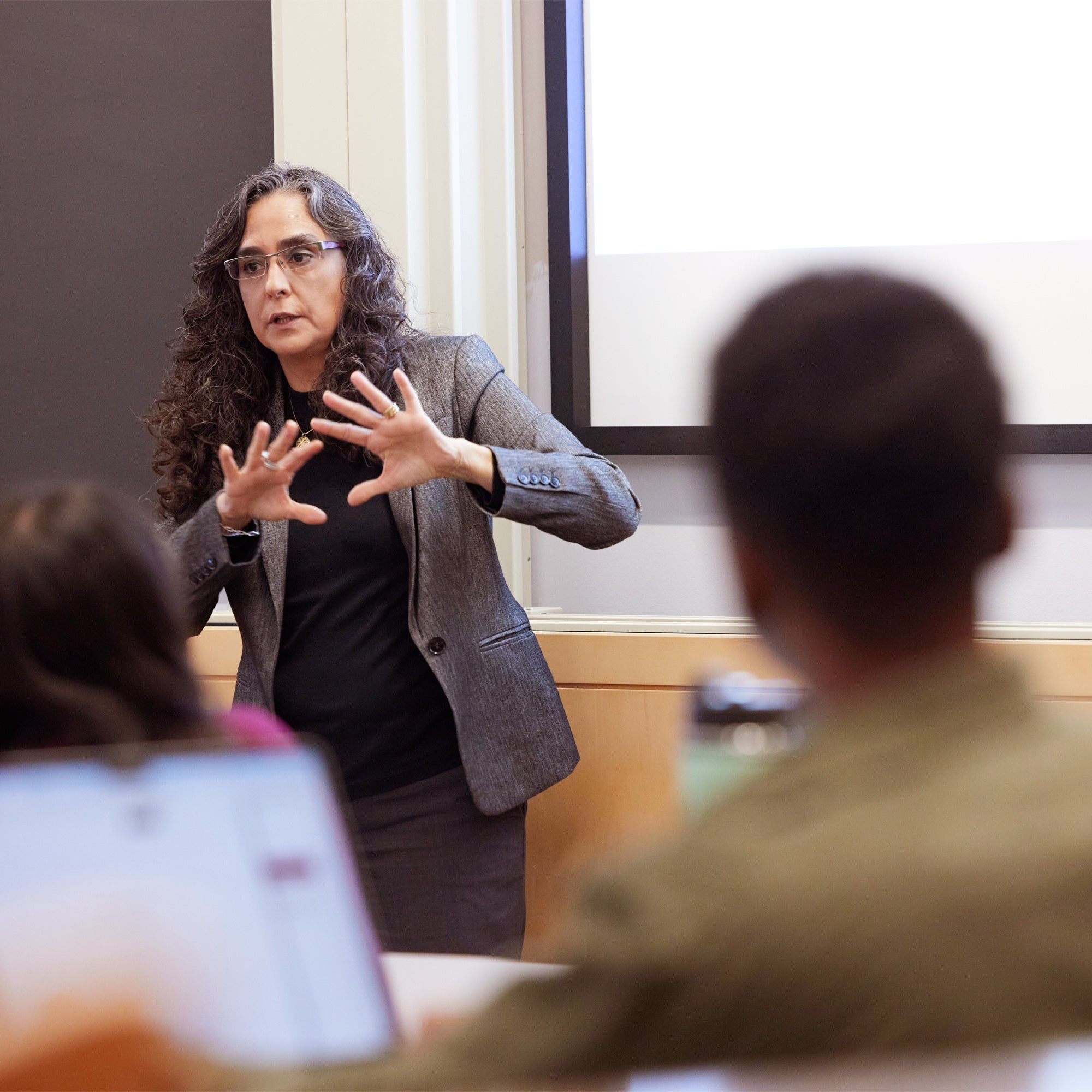
The Executive Education Program lasts for an average of four weeks, with the first week of training conducted at the Tsinghua University School of Public Policy and Management in Beijing. There, participants are provided with a foundation in the fundamental theories and principles of economics and public policy studies. Discussions are also organized in an effort to identify and debate major unresolved issues in China's health sector. Following this initial training at Tsinghua University, the participants spend three weeks at the Harvard School of Public Health where they learn about tools for policy analysis, leadership in theory and practice, regulating and managing the health sector and special healthcare organizations, and international experiences in health system reforms. Lectures are conducted by prominent Harvard professors from the School of Public Health, the Medical School and the Kennedy School of Government, influential health care directors from the greater Boston areas, and distinguished public sector leaders, including former Massachusetts Governor Michael Dukakis.
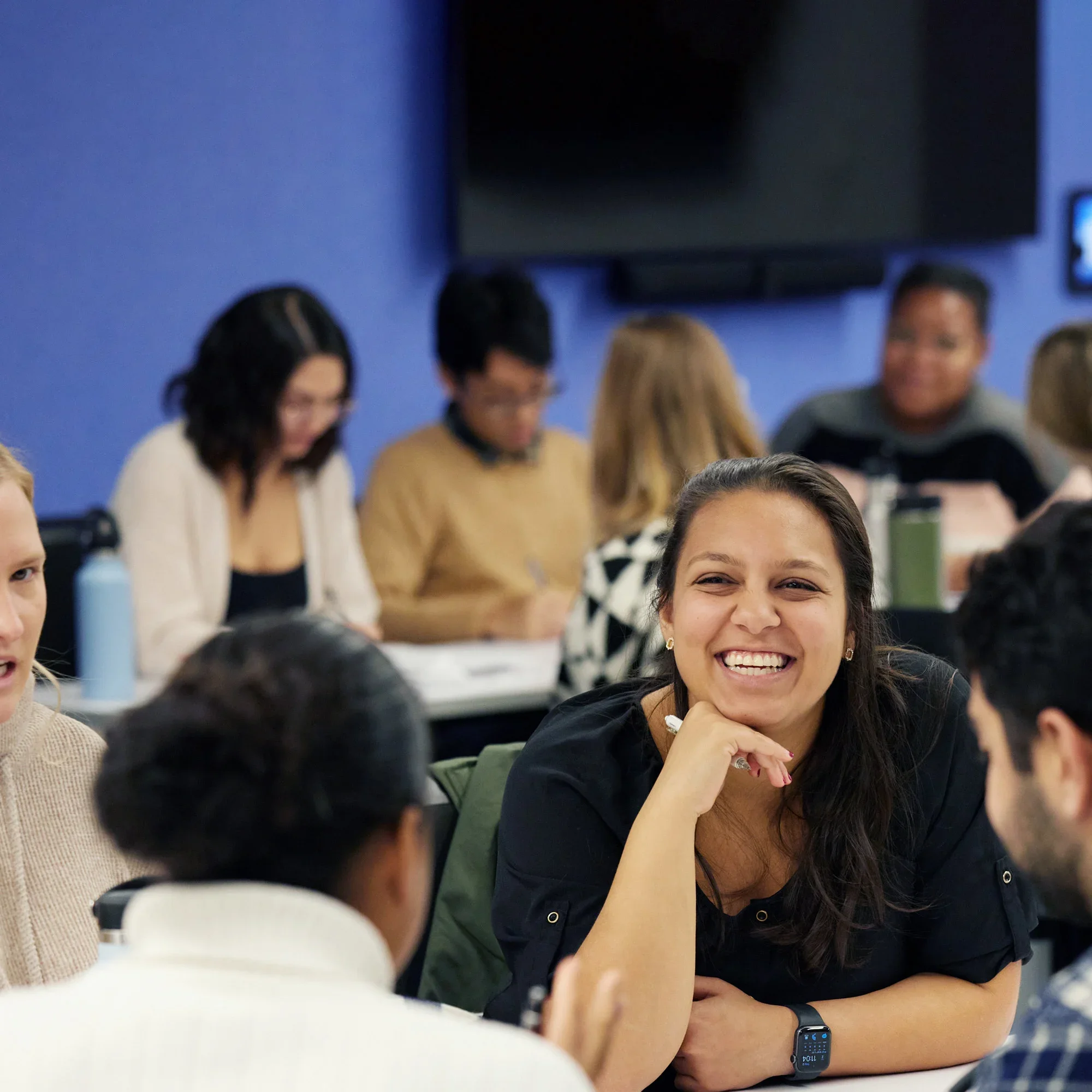
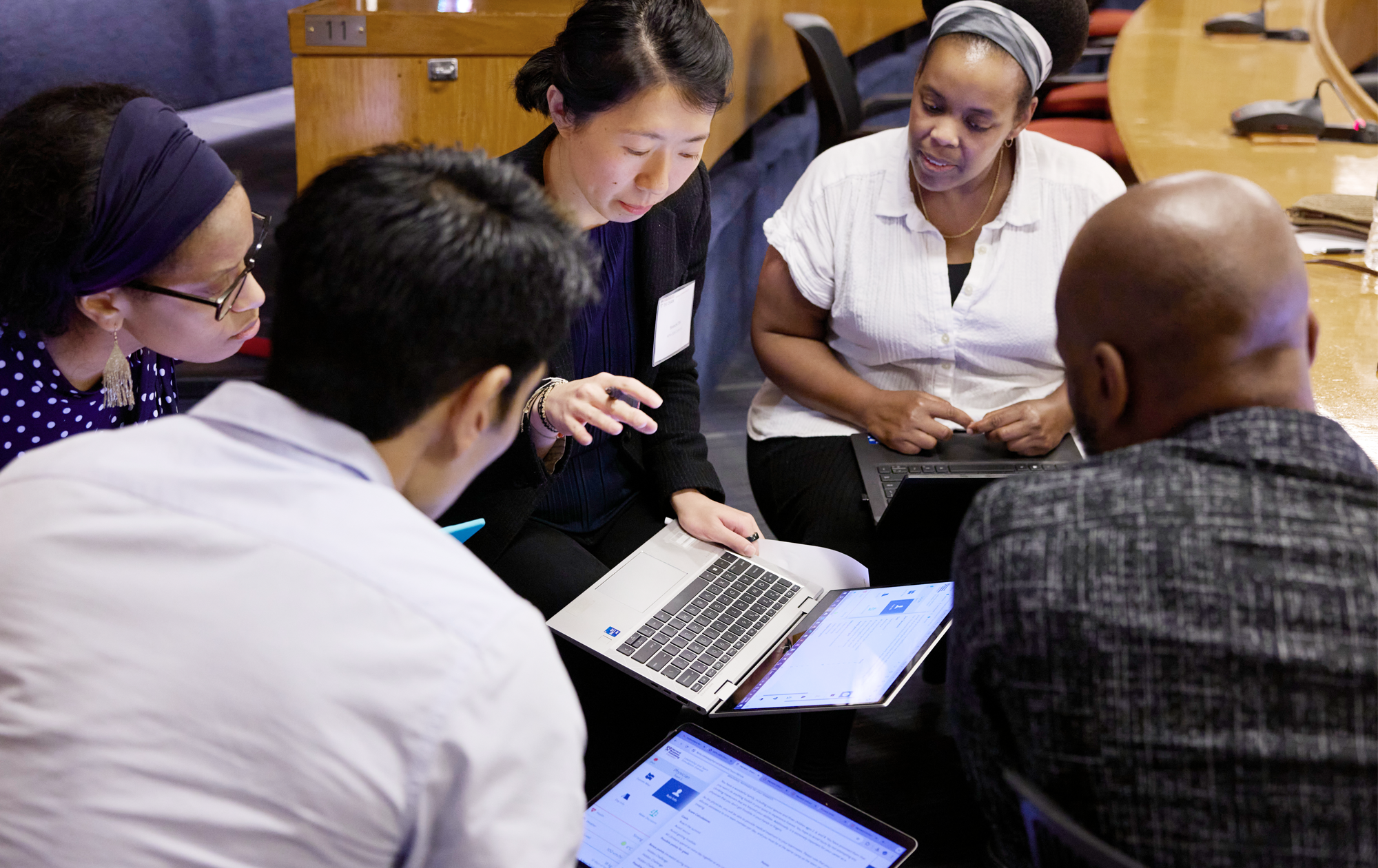
The last day of the program at HSPH is reserved for a symposium on China's health sector reforms and management. Participants are divided into small study groups and each group is assigned a specific topic related to a major area of concern that they have identified. During the symposium, the participants present and discuss their "group diagnosis" on the critical issues they have researched. These diagnoses are documented in a formal report and delivered to the Chinese Ministry of Health.
2008 Executive Education Program Faculty List
2007 Executive Education Program Faculty List
Objectives
The objectives of the
Executive Education Program are as follows:
- To develop participants' comprehensive understanding
of the major global, national, and regional health development and health
system reform issues;
- To sharpen participants' problem-solving, strategic planning, and leadership skills to help them design, introduce,
and sustain major policy and institutional actions directly related to
their own environment;
- To equip participants with an international spectrum
of working models of health development and policy practice against which
they can judge and weigh local issues and options;
- To analyze the particular functional challenges
shaping modern China's health policy environment and healthcare
marketplace and the impact of these challenges on the ability of the
participants to organize and develop effective policy making and strategic processes.
Participants of 2008 Executive Education Program
2008 China Senior Executive Education Program is designed for two major types of senior health leaders in China:
1. Senior Government Officials: These include senior officials responsible for creating health policies and related program administration at provincial and city health bureau directors; and party secretaries in charge of both the health sector and social development.
2. Senior Healthcare Executives: These include presidents and party secretaries of major hospitals and directors of provincial and city Centers for Disease Prevention and Control.
2008 Class Participants List
Participants of 2007 Executive Education Program
The Executive Education Program is designed for two major types of senior health leaders in China:
1. Senior Government Officials: These include senior officials responsible for creating health policies and related program administration at the Ministry of Health and other relevant Ministries; provincial and city health bureau directors; city mayors; and party secretaries in charge of both the health sector and social development.
2. Senior Healthcare Executives: These include presidents and party secretaries of major hospitals and directors of provincial and city Centers for Disease Prevention and Control.
2007 Class Participants List
Progress and Successes
The Executive Education Program has already demonstrated its success with three exceptional trainings completed and a fourth planned for June 2008. The inaugural class of the Executive Education Program for Chinese Senior Government Officials was held August 4-25, 2006 at the Harvard School of Public Health; 28 senior government officials from the Ministries of Health, Finance, Social Security and provincial governments participated in the program. December 4-20, 2006 a second Executive Education Program was conducted at HSPH, this time for hospital CEOs; 32 senior hospital directors from Shanghai and other parts of China participated in the program. The most recent education program took place July 9- July 27, 2007 at HSPH. For the first time, both the government officials and the hospital executives participated in the training together, which allowed for greater dialogue and interaction between the two groups.
Evaluations
The China
Initiative is a dynamic program that seeks to constantly improve and develop.
The first three training classes in 2006 and 2007 were extremely successful. For each session evaluation surveys were given
to all participants, with consistently high evaluation scores for all modules. Feedback
from the Ministry of Health was extremely positive as well. Upon reading the
students' reports on what they learned and their policy recommendations
regarding China's health system reform, Minister Gao Qiang responded with high
praise: "I am pleasantly surprised by the significant improvement of their (the
students') knowledge within such a short period of time!"
Photos courtesy of Suzanne Camarata/HSPH.