Mending the gap: Measurement needs to address policy implementation through a health equity lens.
McLoughlin GM, Kumanyika S, Su Y, Brownson RC, Fisher JO, Emmons KM.
Transl Behav Med. 2024 Mar 21. 14(4):207-214. PMID: 38402599
Karen Emmons is a Professor of Social and Behavioral Science at the Harvard T.H. Chan School of Public Health. She is behavioral scientist with a strong track record of funded research in community-based approaches to cancer prevention in a variety of settings that serve under-resourced communities, including low income housing and community health centers. Her work targets a range of cancer risk factors, including nutrition, physical activity, sun exposure, tobacco and second-hand smoke exposure, and cancer screening. Her research teams have included interdisciplinary perspectives on cancer risk reduction and health disparities, with a focus on multiple cancer risk behaviors. Dr. Emmons has a strong track record as a mentor, and is a past recipient of a mid-career K award focused on dissemination an implementation research to reduce cancer disparities. Her current work and writing focuses heavily on implementation science, particularly in community health settings, and she has been actively involved in national efforts to develop implementation research and training programs. She currently serves as the Faculty Director of the Community Engagement Program for Harvard's Clinical Translational Science Award. Dr. Emmons is Past-President of the Society of Behavioral Medicine, and a member of the National Academy of Medicine.
McLoughlin GM, Kumanyika S, Su Y, Brownson RC, Fisher JO, Emmons KM.
Transl Behav Med. 2024 Mar 21. 14(4):207-214. PMID: 38402599
Chambers DA, Emmons KM.
Implement Sci. 2024 Mar 13. 19(1):26. PMID: 38481286
Vickery KD, Gelberg L, Hyson AR, Strother E, Carter J, Oranday Perez O, Franco M, Kavistan S, Gust S, Adair E, Anderson-Campbell A, Brito L, Butler A, Robinson T, Connett J, Evans MD, Emmons KM, Comulada WS, Busch AM.
Front Psychiatry. 2024. 15:1329138. PMID: 38487573
Kruse GR, Percac-Lima S, Barber-Dubois M, Davies ME, Gundersen DA, Ho O, Mascioli L, Munshi M, Perry S, Singh D, Thomas A, Emmons KM, Haas JS.
J Gen Intern Med. 2024 Feb 08. PMID: 38332440
Aschbrenner KA, Cruz JL, Kruse GR, Nguyen H, Huebner Torres C, Celli M, Sarcione C, Singh D, Emmons KM.
Transl Behav Med. 2024 01 11. 14(1):23-33. PMID: 37542519
Zulkiewicz BA, Winickoff JP, Gottlieb MA, Emmons KM, Tan ASL.
Addict Behav Rep. 2024 Jun. 19:100524. PMID: 38226008
de Kermadec E, Zheng Y, Rosenberg S, Ruddy KJ, Ligibel JA, Emmons KM, Partridge AH.
Cancer Med. 2023 Dec 22. PMID: 38131887
Zhou ES, Revette A, Waitt J, Lehmann LE, Diller LR, Emmons KM, Valenzuela AF, Redline S.
Pediatr Blood Cancer. 2024 Mar. 71(3):e30816. PMID: 38110847
Liu J, Winickoff JP, Hanby E, Rees V, Emmons KM, Tan AS.
Drug Alcohol Depend. 2024 Jan 01. 254:111055. PMID: 38071894
Asada Y, Kroll-Desrosiers A, Chriqui JF, Curran GM, Emmons KM, Haire-Joshu D, Brownson RC.
Front Health Serv. 2023. 3:1220629. PMID: 37771411
Workers and the general public in the U.S. aren’t getting timely access to respiratory protective devices—face coverings, medical masks, and respirators—to protect against hazards ranging from airborne infections such as SARS-CoV-2 to wildfire smoke to mold growing indoors…
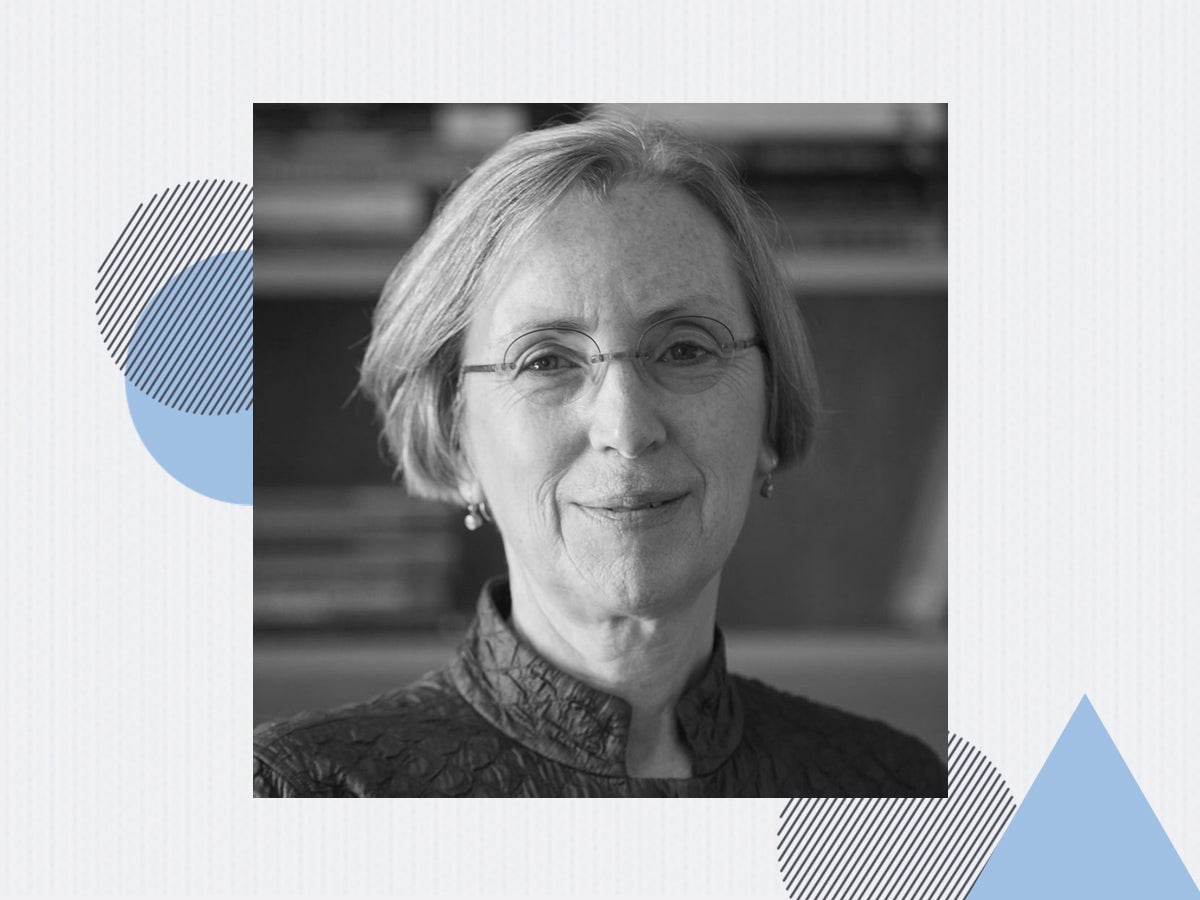
Karen Emmons, professor of social and behavioral sciences, says that implementation scientists can bring the full benefits of scientific discovery to health, and improve cancer control, by focusing more on the policy-making process.
Researchers, industry leaders, and policymakers should work to build trust in COVID-19 vaccines among communities of color—and, beyond that, should seek to include these communities as equal partners in the research enterprise, according to new commentary.
Aisha Yousafzai, Sonia Hernandez Diaz, Karen Emmons were honored at the annual Alice Hamilton Award lecture.
A collaborative team from Harvard Chan School, the Kraft Center for Community Health at Massachusetts General Hospital (MGH), and the Massachusetts League of Community Health Centers will work together to scale up COVID-19 testing in communities with underserved…