Harvard Chan NIEHS Center for Environmental Health
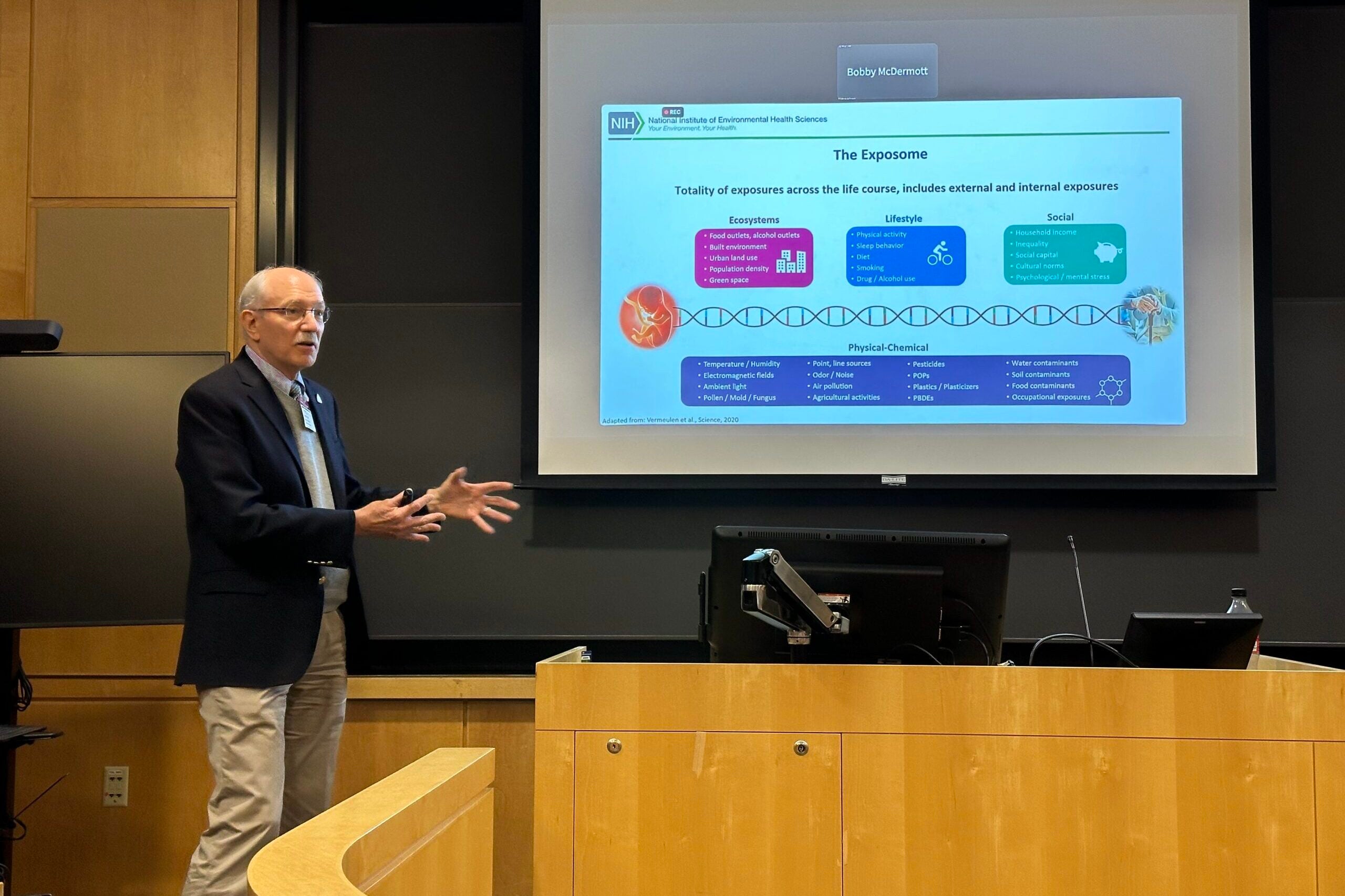
The Harvard Chan National Institute of Environmental Health Sciences (NIEHS) Center for Environmental Health is a coordinated set of resources and facilities supporting environmental health research and training activities throughout the greater Boston area. The center promotes integration between basic and applied environmental science, and fosters collaborations that cross departmental and institutional boundaries.
Building 1-1402

Core Components
The Harvard Chan NIEHS Center for Environmental Health builds research capacity, fosters multidisciplinary and translational research, and prioritizes community engagement.
Translational Research Support Core
Support across all four of the Center’s pillars of research excellence—Epidemiology, Exposures, Mechanisms, and Community Science—and integration of activities.
Environmental Health Data Science Core
Centralized support and training in data management, research computing, biostatistics, statistical genetics, bioinformatics, environmental epidemiology, and spatial statistics.
Community Engagement Core
Partnership with community organizations and initiatives to co-develop strategies that address local, regional and national environmental health concerns.
Pilot Project Program
Awards of up to $30,000. Calls for applications in spring and fall.
Career Development
Financial support, mentoring, professional network building, and general guidance for new investigators.
About the Center
Populations to pathways to prevention:
Environmental health science to empower action
Mission: To understand the contribution of environmental exposures to disease to empower action to prevent disease and improve public health, and address real-world environmental health issues faced by communities by promoting collaborations, partnerships, and translation.
Vision: To foster multidisciplinary collaborations to conduct innovative environmental health science research that nimbly addresses the current and future challenges of a complex environmental health exposure space.
Who we are




Join us
Upcoming Events
Latest News

Support Harvard Chan School
Every gift contributes to our mission of building a world where everyone can thrive. To learn more about how you can support the Harvard Chan NIEHS Center for Environmental Health, please contact the Harvard Chan Development Office or use the giving button below, select “Other,” and write “Harvard Chan NIEHS Center” in the text box.