

Sarah Fortune
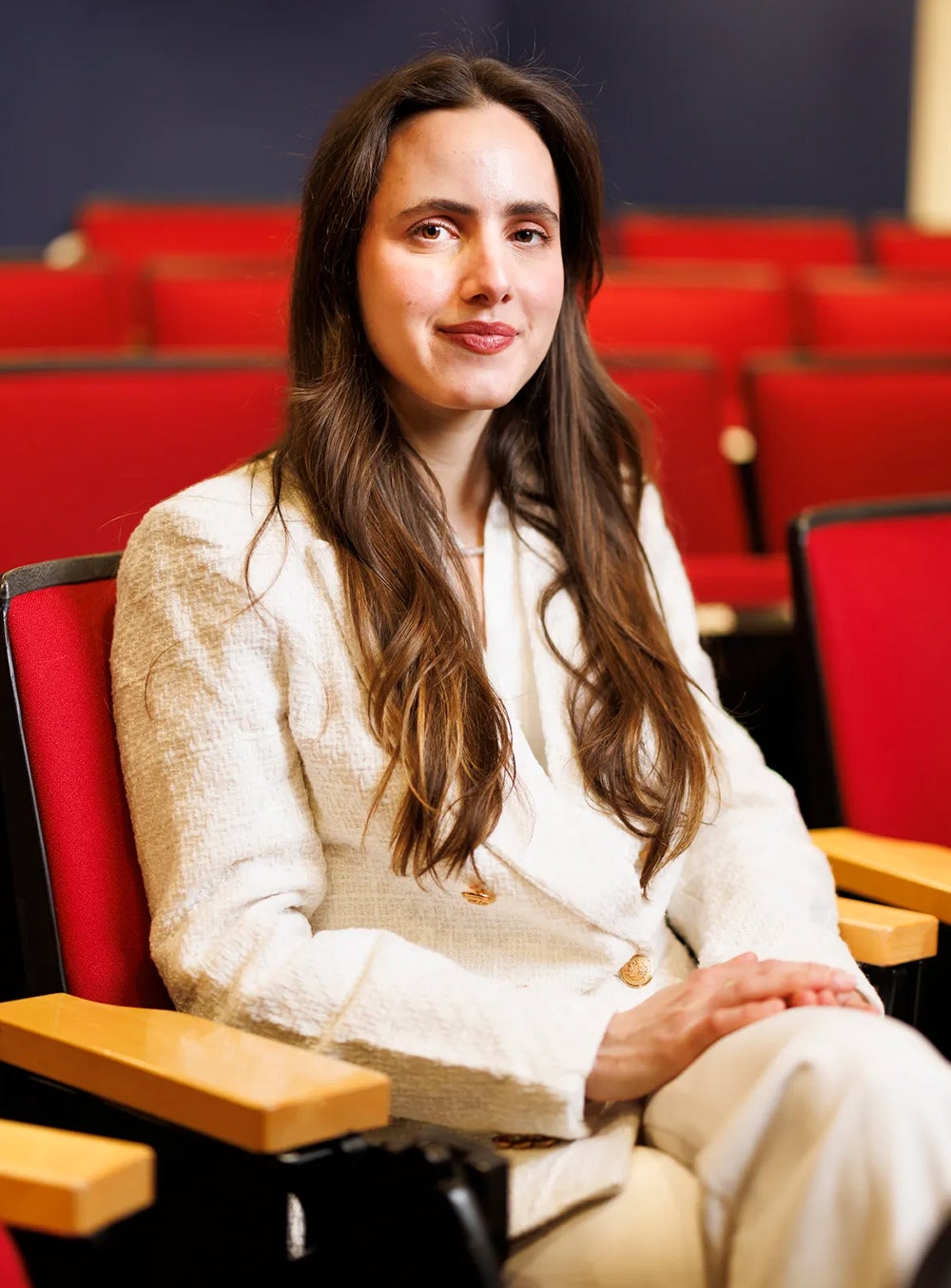
Yet, for a pathogen that has been around for millennia, scientists still don't know some key aspects about the bacilli. Specifically, they have no idea how the bacilli evade the body's immune response. Sarah Fortune, assistant professor of immunology and infectious diseases at HSPH, is trying to work out that process. And, she has just been named among the first recipients of the New Innovator Awards inaugurated by the National Institutes of Health (NIH) to test her ideas.
According to the World Health Organization (WHO), one-third of the world's population is currently infected with the pathogen that causes tuberculosis. Many of those infected live in the developing world. Approximately two million people die from tuberculosis each year.
Tuberculosis is caused in humans by bacilli Mycobacterium tuberculosis that can spread from person to person through droplets expelled into the air from infected respiratory systems. Many healthy people's immune systems can control the infection so that the illness remains latent, but the risk of developing active disease climbs enormously among people who have HIV or other illnesses that compromise the immune system.
No one understands how the immune system holds the infection in check but fails to clear it. Fortune speculates, contrary to the prevailing model, that the bacteria change significantly during the course of infection, staying one step ahead of the host's ability to recognize and kill them. She is working with a team of students, postdoctoral fellows, and other faculty to figure out this process.
"Little is understood about the dynamic interaction between M. tuberculosis and the infected host over the long course of infection," said Fortune. "To begin to elucidate this process, we have posed simple questions: does the bacterium vary gene structure and/or expression over the course of infection, and is this variation advantageous to the bacteria? The answers will allow a better understanding of the variations of bacteria like those that cause TB. Equally important, studying the variations will help us identify at what points M. tuberculosis changes to evade the immune response. Ultimately, these vulnerabilities may suggest specific targets for the development of vaccines and therapeutics."

Mycobacterium tuberculosis bacilli, which have been stained.
Fortune plans to capitalize on new genomics technologies that will allow her to assess variation among TB bacteria. She is testing two key ideas. Does M. tuberculosis undergo heritable genetic changes that allow that pathogen to persist in the immune system? These changes would be along the lines of mutations or entire deletions and additions to the bacilli's DNA.
Or, like a shapeshifter straight out of science fiction, does M. tuberculosis undergo epigenetic changes - not changes to the DNA itself. In this line of questioning, Fortune wants to see whether turning certain genes on and off - and thereby controlling the proteins expressed by M. tuberculosis - at certain points in the course of infection allow the bacilli to evade the immune system. And, are these changes heritable?
The NIH award that will support this work is aimed specifically at scientists who are in the early stages of their careers. Fortune was one of nine researchers affiliated with Harvard to receive either an Innovator Award or a Pioneer Award, announced by NIH Director Elias Zerhouni on September 19.
"I am thrilled to have received this award," said Fortune. "At HSPH, I have benefited from tremendous mentorship from Dr. Eric Rubin and Dean Barry Bloom, who has encouraged me to focus on the 'Big Questions.' When studying an illness such as tuberculosis, which has been around for millennia, it is important to consider not just scientifically interesting questions, but those that are important to changing the face of TB."
Said HSPH Dean Barry Bloom, "Sarah Fortune is one of those junior faculty that senior faculty dream of - bright, innovative, independent, willing to take risks, and extraordinarily effective as a scientist and a delight to work with as a colleague."
The NIH Innovator Award is the third prize Fortune has received in less than a year. In August, Fortune was named a recipient of an Early Career Award for Physician-Scientists from the Howard Hughes Medical Institute. In December 2006, she was named an award recipient from the Charles H. Hood Foundation.
Fortune earned her B.S. in biology at Yale University in 1990. She was graduated with a degree in medicine from Columbia University College of Physicians and Surgeons in 1996. Following a clinical fellowship, Fortune came to HSPH as a postdoctoral fellow in the laboratory of Eric Rubin. Last year, Fortune was appointed as Assistant Professor of Immunology and Infectious Diseases at HSPH.
Copyright, 2007, President and Fellows of Harvard College