


Science catalyst for social change, Lancet editor tells Humanitarian Summit
How far should public health practitioners push science into politics? “Where do you draw the line?” Lancet Editor-in-Chief Richard Horton asked a room full of international aid experts and students at the 2009 Humanitarian Action Summit. For Horton, the line has moved dramatically in recent years, he said. While he once shied away from bridging potentially controversial topics in the pages of his journal, he now sees science as a way to find common ground and catalyze social change.
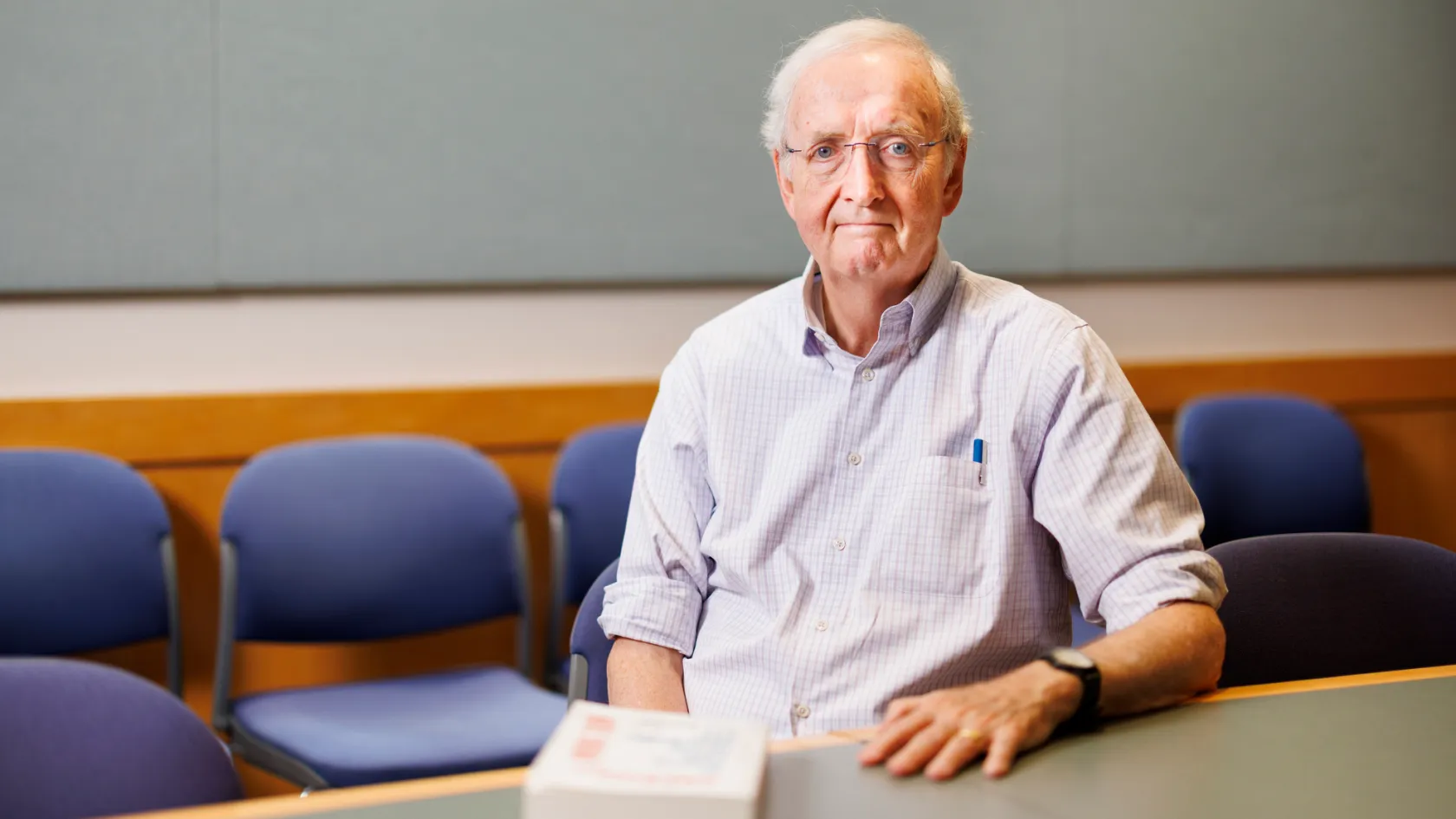
Richard Horton
Horton spoke on March 26 at Harvard’s Weatherhead Center for Government and International Studies as part of a three-day event sponsored by the Harvard Humanitarian Initiative. The Initiative is co-directed by HSPH faculty members Jennifer Leaning and Michael VanRooyen, who is also assistant professor of medicine at HMS. Proceedings from the summit will be published online.
Science provides evidence that can be used to hold politicians accountable for the health of their people, Horton said. He praised HSPH Dean Julio Frenk, who formerly served as Mexico’s Minister of Health, for his work establishing that country’s first comprehensive national health insurance program, known as Seguro Popular. The ambitious program, which emphasizes redressing social inequality, was formulated on a firm base of scientific evidence, Horton said, calling it “one of the most impressive health system reforms we’ve ever seen in any middle-income country.”
In an effort to foster what he called a “global culture of science,” Horton is working to document the state of public health in countries around the world. Following an issue last fall devoted to China, the Lancet published a grouping of Perspectives and articles about the health of Palestinians in its March 7, 2009, issue.
“The goal of this Series on Palestinian health is to change the way health professionals, politicians, policy makers, media, and the public view, think about, and discuss the predicament facing this region of the Middle East,” wrote Horton in a Comment in the issue. He continued, “The purpose of our alliance with Palestinian, UN, and international health scientists and policy makers is to bring the best descriptive and experimental evidence to bear on the health of Palestinians and the performance of the Palestinian health system. A thorough review of available data should allow rational evaluation of future options for health improvement and health-system strengthening. Our Series might also be useful as a scientifically sound platform for advocacy, awareness, and action around health. We see this work as a starting point for a new approach and attitude to the occupied territory.”
Jennifer Leaning, HSPH Professor of the Practice of Global Health, served on the issue’s editorial steering committee, offering feedback on the articles and helping ensure that rigorous scientific standards were applied throughout. Her proposal to use the concept of “human security” as a framework for the series was critical to its conception, Horton said. The United Nations defines human security as including “safety from such chronic threats as hunger, disease and repression, and protection from sudden and hurtful disruptions in the patterns of daily lives.”
The issue can be read on The Lancet's website. Free online registration is required.
Through reporting and analyzing the health conditions faced by people around the world, scientists play a crucial role in democratic discourse, Horton said. They help find the answers that create change and make the world a better place. “That is the mission of public health,” Horton said.
More than 150 leaders from the humanitarian community attended the three-day summit. It was the third of a series that began in 2006 and continued in 2007. A fourth is planned for 2010. Participants are divided into six working groups based around international aid challenges, which continue collaborations throughout the year. They include: human resources, data management, civilian protection, mental health, surgical standards, and applied technology.
-- Amy Roeder. Photo by Suzanne Camarata.
HPH NOW