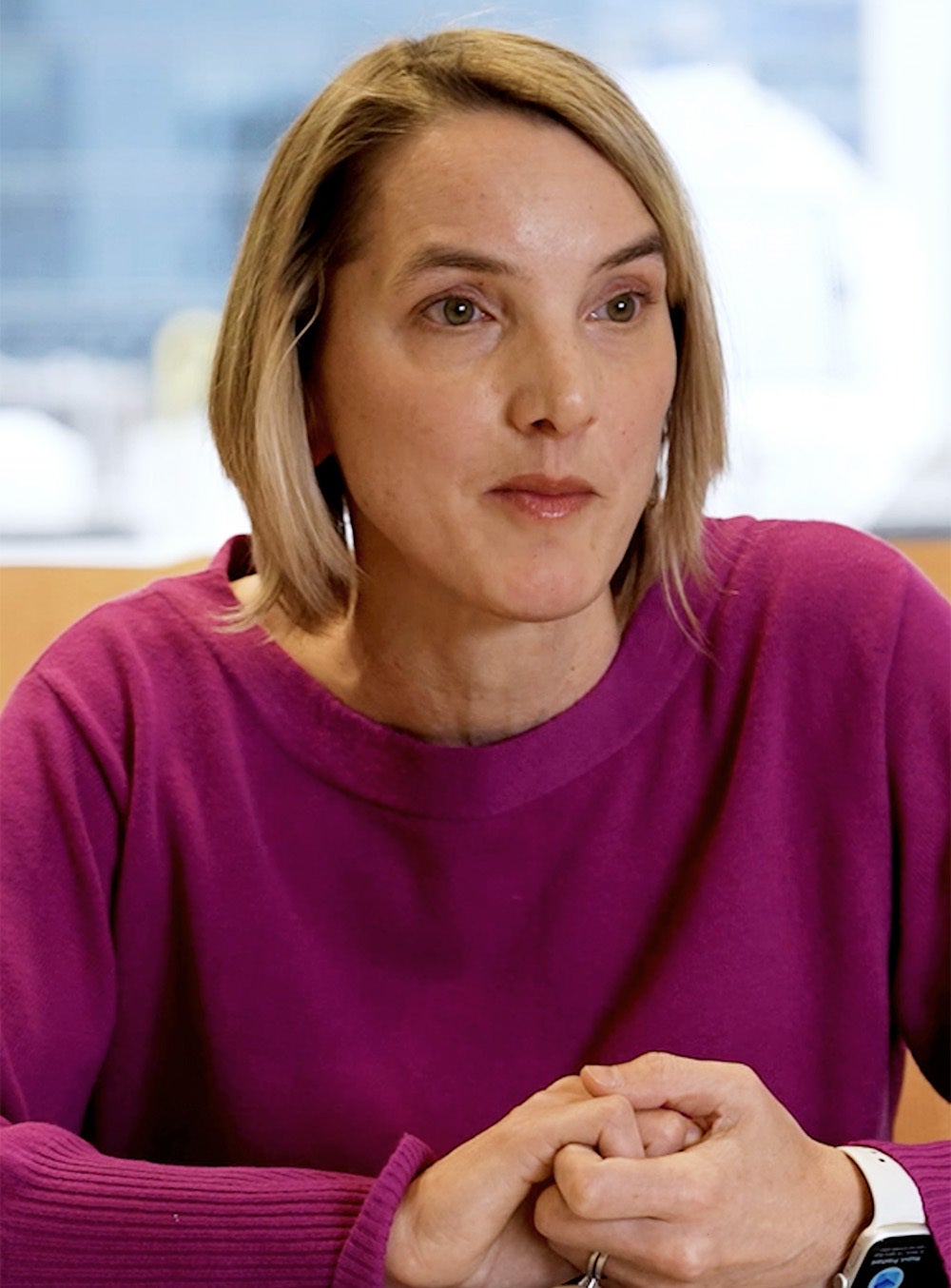



Jack Shonkoff
"Science is making it harder to walk away and think that kids will just forget about hard times," said Shonkoff at a colloquium on "The Science of Child Development: A New Lens for Public Health" on November 14 in FXB G-13. The talk was part of a series sponsored by Harvard's Center on the Developing Child. Shonkoff heads the Center.
Research already has indicated that the more adversity in early life - abuse, neglect, poverty, and other stressors - the greater chance that children will experience depression and substance abuse problems as adults. In addition, said Shonkoff, epidemiological studies have suggested an association between early-life trauma and later physical diseases such as hypertension, heart disease, obesity, stroke, and some forms of cancer.
"We suggest that the biology of stress [offers] important insights into the roots of how poverty gets under the skin and into the [developing] brain and immune system," said Shonkoff. While some stress is normative and character-building, he noted, excessive and persistent adversity produces sustained elevations of stress hormones such as cortisol that are potentially damaging to the brain, especially in the early childhood period when basic neural circuitry is developing.
If stress is particularly high, prolonged, or recurrent in the early years, children who are not buffered by supportive relationships may end up with a permanently lower threshold for activating their stress response system, explained Shonkoff, meaning that these individuals will experience stress more readily than their peers throughout their lives. It is a compelling hypothesis that this lower threshold is one reason why some adults are more likely to have diabetes, hypertension, or myocardial infarction, he added.
Targeted interventions for young children experiencing "toxic stress" could have potentially tremendous benefits, Shonkoff suggested. The child welfare system is particularly ripe for viewing early maltreatment as a public health concern rather than a social service issue. "Rather than moving children from home to home, we need to address the magnitude of their [developmental] needs," he said.
In addition to Shonkoff, the lecture featured two discussants. HSPH Professor Ichiro Kawachi emphasized that much work remains to be undertaken in establishing a causal link between childhood adversity and health.
The evidence linking early-life stress to subsequent disease is stronger in animals than humans at this point, he said. Enriched preschool experiences for low-income children in disadvantaged communities have been shown in longitudinal studies to be beneficial in terms of eventual lower cost for special education, less frequency of holding students back a grade, less funding spent on public assistance as adults, and less incarceration. "But the link to health is still lacking, largely because of the long latency between early experiences and disease onset," he said.
Fellow discussant and HSPH Professor David Williams focused on the harmful influences of disparities. He said, "The uneven socioeconomic distribution of risk factors for children has critical implications."

David Williams (l) sits with Ichiro Kawachi.
Williams cited data on the racial distribution of poverty, the correlation between family socioeconomic status and a child's SAT scores, the rising rates of infant mortality, and the disadvantages of segregation.
"Social policies matter," Williams said. In the U.S., for example, growing up in a single-parent household is a strong predictor of poverty. Yet, as a matter of comparison, the situation is dramatically different in Sweden. The two countries have similar rates of children living in single-parent households, but Sweden has far fewer children living in poverty because of the country's tax structure, which assists single parents.
"We may not have all of the science, but we have enough information to take action," Williams urged.
—EB
Copyright, 2007, President and Fellows of Harvard College