
Email Share
Close
E-mail It

NOTE: Recipients' Email Address currently accepts only 5 email addresses separated by commas.

Harvard Public Health NOW

June 5, 2008

Bethany Hedt: Using Math to Improve Disease Monitoring

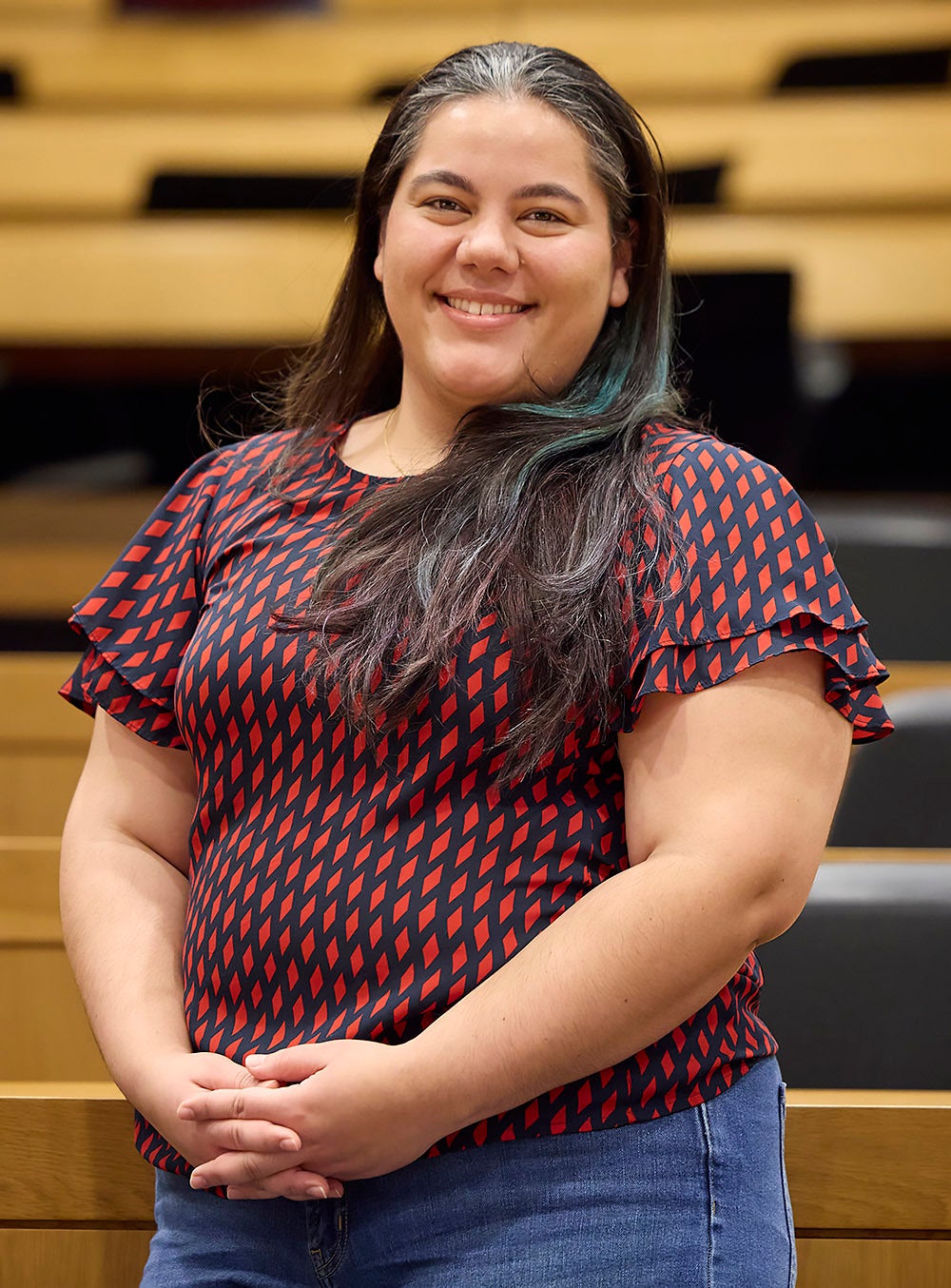
Bethany Hedt (Bethany_Hedt_25.jpg)

Bethany Hedt

Perhaps it started when she was an undergraduate student at the University of North Carolina (UNC). While there, Bethany Hedt served as president of Masala, an organization serving many cultural groups on campus. She expanded the group's mission to organize dialogue among 14 cultural, ethnic, and multicultural campus groups. Masala lent its support to numerous campus initiatives that addressed minority issues and disparities. And the work exposed Hedt to the beauty of working across cultural boundaries.

Now, Hedt is a graduating student at HSPH with a PhD in biostatistics. She has won the 2008 Fang Ching Sun Memorial Award, which recognizes an outstanding graduating student who has demonstrated a commitment to promoting the health of underprivileged people. And she has chosen to make the people and region of southern Africa the focus of her life's work.

"It really speaks to me," she says.

In 1999, while a math major at UNC, Hedt committed to spending two years in Namibia with the Peace Corps teaching high-school level math and science. She chose to stay for a third year, working with the Crisis Corps, a branch of the Peace Corps. During the third year, she helped coordinate a Ministry of Education Committee that set regional priorities for HIV/AIDS education and developed and facilitated HIV/AIDS workshops for teachers.

"When I was there, I realized all the other challenges the country was facing," says Hedt. "The impact of HIV/AIDS was enormous, and at that time there were no local services."

Hedt's time in Namibia convinced her to match her interest in math to her commitment to research and service in the developing world. She enrolled at HSPH in the Department of Biostatistics in 2003.

She notes that biostatistics seemed like a natural way of combining her interests and helping more people in desperate need. Each experience — the people she meets, the faculty and fellow students at HSPH — has been instrumental in her professional evolution, she says.

Since coming to the School, Hedt has worked on a World Bank project initially developed for Kenya and Ethiopia and since implemented in several countries. The project involves combining two methodologies commonly used in program monitoring and evaluation — Lot Quality Assurance Sampling and cluster sampling — to obtain local and national measures of health care quality and management.  The work garnered Hedt the Student Award in Practice (International Health Section) from the American Public Health Association (APHA) in 2006. She was the only student to receive the award that year.

Hedt was selected by the American Schools of Public Health to be a fellow at the CDC from September 2006 to August 2007. The work brought her to Malawi, one of the world's poorest countries hard hit by HIV/AIDS. She worked with the CDC/Malawi Ministry of Health Partnership and their National AIDS Commission to help collect, analyze, and interpret data for HIV/AIDS strategic information, monitoring and evaluation, and surveillance activities.

While in Malawi, Hedt assisted in the development of the Kasitu Foundation, an NGO that works specifically in a village called Kasitu in the remote district of Nkhotakota. Hedt organized a fundraiser to support the NGO's HIV/AIDS education activities. She also helped arrange for training of villagers in sewing local cloths. The sale of the cloths help fund the Kasitu Foundation.

"This helped me realize where the needs are," she says. "It allowed me to keep my research relevant."

Hedt used her experience in Malawi to underpin her HSPH thesis work, "Novel Methods for Efficient Surveillance and Monitoring." She has developed methods to make disease program monitoring and surveillance more streamlined and effective in settings with limited resources. Her thesis is intended for the developing world, she says, but is applicable everywhere.

Hedt's volunteer spirit applies closer to home, too. During her time at HSPH, Hedt has participated in the Big Brothers Big Sisters of America program. She tutored adults studying for their GED and volunteered at special events for the local AIDS Action Committee. Most Fridays, she helps out at a local soup kitchen.

"I do it in part because I get so much joy out of it," she says. "I like to think of myself as a true member of the community I live in. What is called ‘volunteering' is my way of connecting with the community."

After graduation, Hedt plans to stay at HSPH as a postdoctoral fellow.

—Ellen Barlow. Photo by Suzanne Camarata