

![]() |
![]() |
![]() |
![]() |
|
![]() |
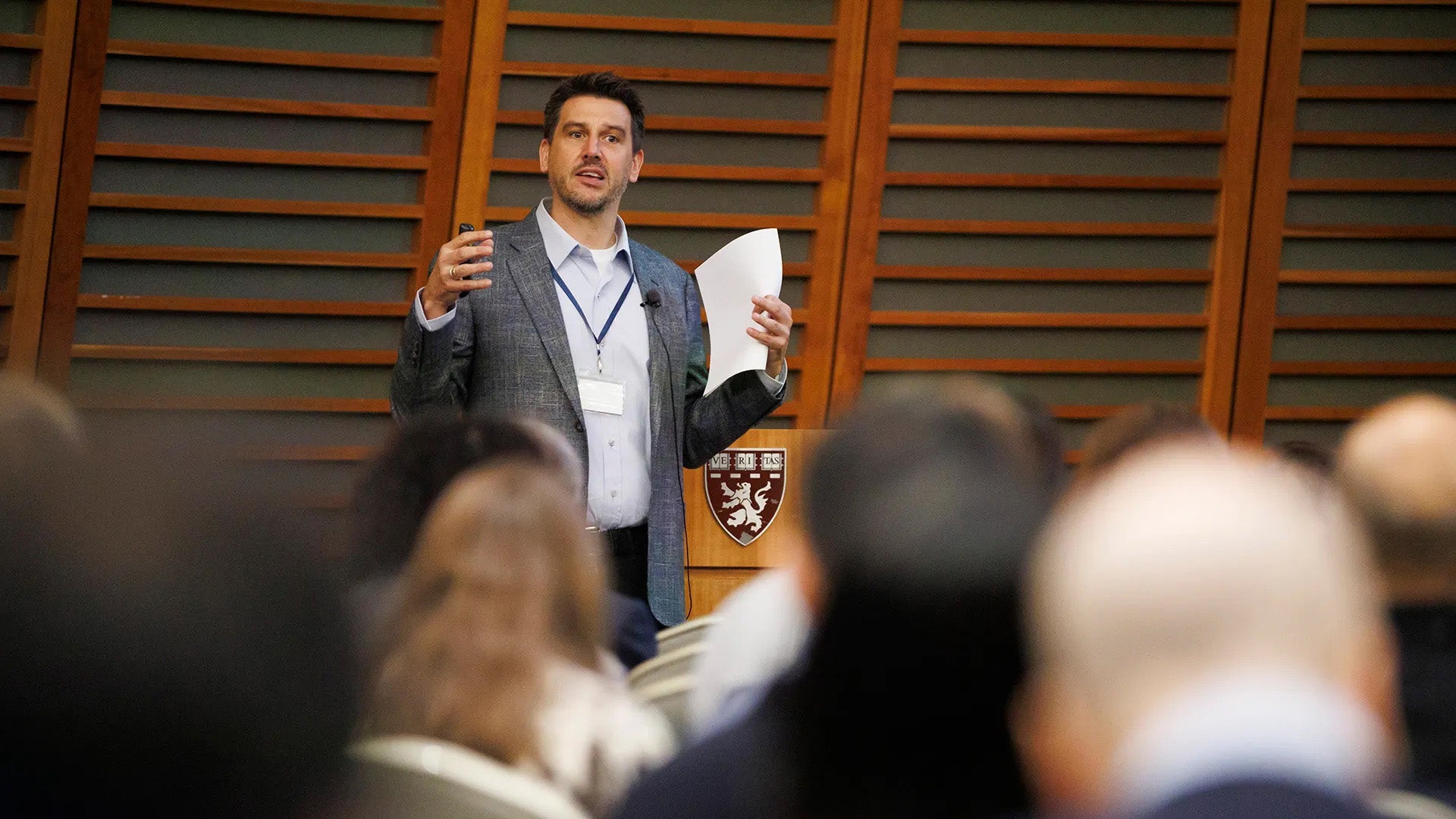
The subject of longevity was part of a larger two-day John B. Little Symposium in Radiation Sciences and Environmental Health held recently at HSPH. The annual symposium seeks to bridge the interests of radiation biologists and scientists studying basic mechanisms in cancer biology. The event drew more than 400 scientists.
"Aging has many and variable causes that differ from organism to organism, but SIR2 seems to be able to override them," Guarente said. In yeast, SIR2 seems to sense reduced caloric intake and change mitochondrial metabolism to a more efficient process that produces cellular food known as ATP. In experiments in mice, the equivalent longevity gene SIRT1 downregulated the tumor suppressor gene p53. That result suggested the gene may work to preserve organ integrity by minimizing cell loss and expanding lifespan, Guarente said. The result also, however, raised concern about a potential cancer-promoting effect.
The gluttonous mice are not just fat; they develop patchy fur and spontaneous tumors. Calorie-restricted mice also get tumors, but later in life, indicating slower aging, Prolla said. Researchers in Prollas lab have been comparing how genes are expressed in mice to identify early markers of aging. In one study of middle-aged mice, Prolla and his colleagues found that restricting calories increased lifespan, reduced heart disease and reduced cancer incidence. In side experiments, the popular supplements alpha-lipoic acid and co-enzyme q10 had no effect, and two forms of vitamin E may have delayed some changes in the heart, but not as effectively as eating less food.
Living longer can pose risks for organisms that make new cells every day. Cells have the potential for runaway division, which is a hallmark of cancer. To avoid this, long-lived complex organisms use tumor suppressor genes to help prevent cancer.
For more information, about the John B. Little Center for Radiation Sciences and Environmental Health, visit http://www.hsph.harvard.edu/ccb/JBL/JBLHome.htm. Harvard Public Health NOW is published biweekly by the Office of Communications Harvard School of Public Health 665 Huntington Ave., SPH 1-1312 Boston, Massachusetts 02115 617-432-6052 Editor and Layout: Christina Roache Contributing Writers: Paula Hartman Cohen, Carol Cruzan Morton Calendar Editor: Melitta King Photos Credits: Suzanne Camarata; Jossey-Bass Publishers; Justin Ide/Harvard News Office; Greenwood Publishing Group; Christina Roache Archived Issues || HSPH Home Copyright, 2009, President and Fellows of Harvard College |