


![]() |
![]() |
![]() |
![]() |
|
![]() |
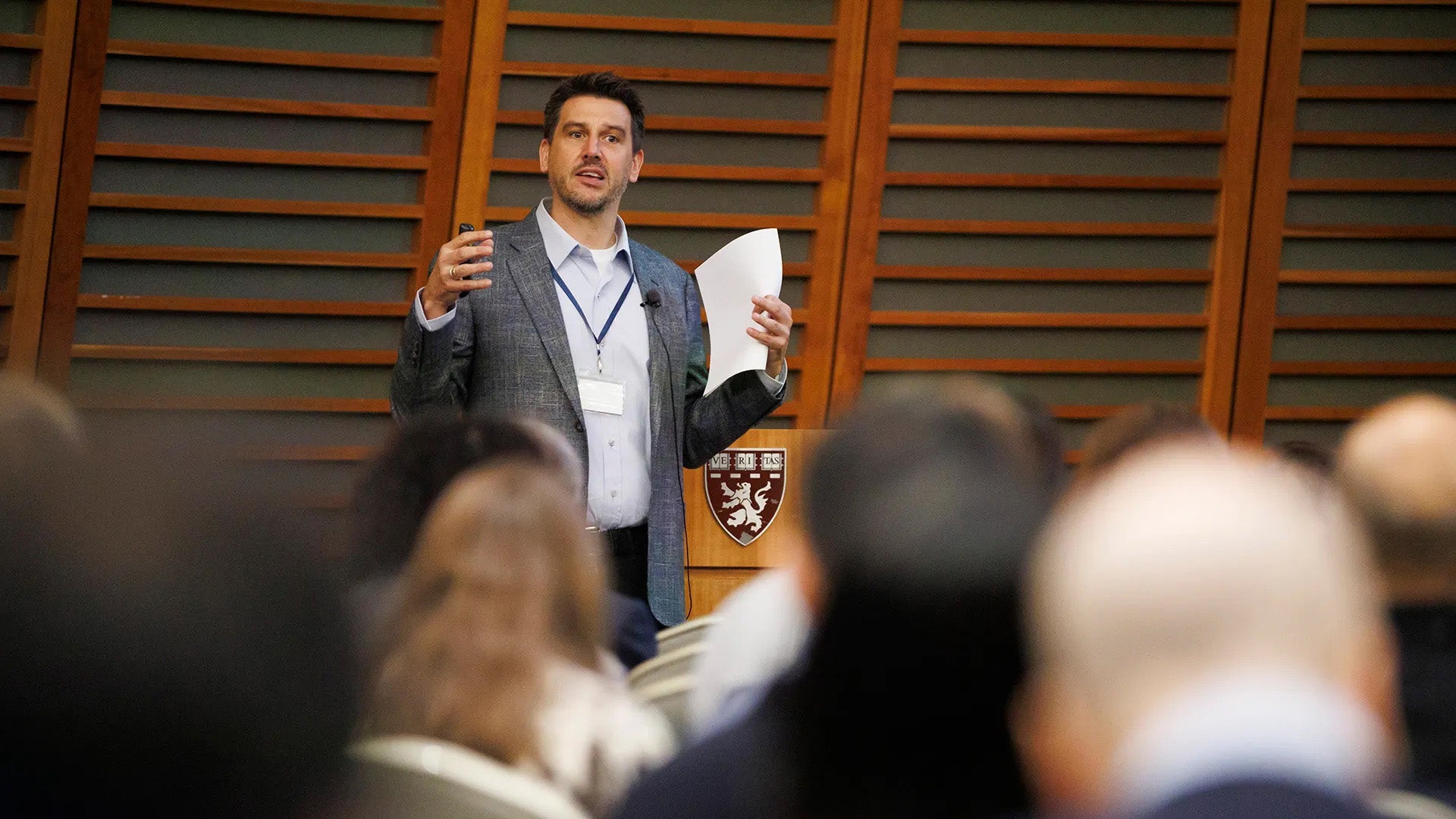
Untangling the statistics behind the excess risks falls to biostatisticians, who gathered at a diversity workshop on June 13 in Snyder Auditorium to focus on obesity and physical activity among minority populations. The day-long session attracted 140 students, faculty, researchers, clinicians, and community health workers. It was held as part of the annual Summer Program in Quantitative Sciences, a four-week diversity program for 12 undergraduate students organized by the HSPH Department of Biostatistics. Speakers outlined the prevalence of the problem. They discussed concepts and controversies about reducing obesity in ethnic minority populations, such as the need to emphasize health issues over cosmetic appearance and activity over exercise. And they shared several intervention strategies to increase physical activity and encourage healthier food choices. The slide presentations are online at http://biosun1.harvard.edu/diversity/summer/Summer_2005/Presentations_Speakers.htm. In the U.S., more than 60 percent of people older than 20 years are overweight, and one-third of adults are obese, said Ranjita Misra, associate professor of health and kinesiology at Texas A&M University. Since 1991, the prevalence of obesity among adults has increased by more than 75 percent. According to a national study, the prevalence of overweight rose by more than 120 percent among African Americans and Mexican Americans, compared to 50 percent among whites, she said. There has been a rapid increase in obesity among children and teens. About 16 percent of all children and teens in the U.S. are overweight, she said. No baseline data exists for the fastest growing ethnic category in the country, Asian Americans and Pacific Islanders. And, she noted, lumping dozens of subgroups into one group may mask the true prevalence of obesity and associated health risks. Asked Shiriki Kumanyika, associate dean for health promotion and disease prevention at University of Pennsylvania School of Medicine: "Now that we know there is a higher risk in certain ethnic groups, what do we do about it?" History may be as important as randomized trials in fashioning an effective public health policy to address childhood weight issues, said Kumanyika, who was a member of an Institute of Medicine committee that developed a national action plan to prevent childhood obesity. Solutions for the obesity epidemic can be found in the same effective combination of personal behavior and social transformation responsible for past major public health achievements, such as discouraging tobacco use, encouraging vaccination, and mandating motor vehicle safety. A national survey that tracks progress toward federal Healthy People 2010 goals shows little progress in efforts to increase physical activity. "We've barely made a dent in the past five years," said Melicia Whitt-Glover, assistant professor of public health sciences and epidemiology at Wake Forest University School of Medicine. In a church-based pilot study designed to increase physical activity among African-American women in Atlanta, Whitt-Glover avoids use of the word "exercise." Instead, she focuses on increasing the amount and intensity of usual daily activities and removing typical barriers for physical activity. "The whole basis is 'no excuses,'" she said. "Everyone has time to do a 10-minute bout of activity three times a day." So far, the scientific literature offers few insights into effective exercise interventions, especially those targeted to the disproportionately affected minority groups. But two HSPH projects directed at children show lasting results from carefully planned and conducted school-based programs. Eat Well and Keep Moving started out as a demonstration more than 10 years ago in urban Baltimore elementary schools, said Lilian Cheung, lecturer in the HSPH Department of Nutrition. Developed in consultation with teachers, parents, school staff, and students, the nutrition and physical activity lessons can be taught in the classroom and integrated into existing core subjects, such as the mathematics of graphing the number of hours of television watched each week. This fall, the researchers will introduce web-based teacher training at http://www.hsph.harvard.edu/prc/. Planet Health, a parallel program for middle-school students first tested in Boston, focuses on positive behavioral targets, said Steve Gortmaker, professor of society, human development, and health at HSPH. "We never talked about obesity," said Gortmaker, citing studies showing clear evidence of discrimination against overweight people. Instead, the program focuses on healthy eating and developing fun alternatives to television. --CCM Harvard Public Health NOW is published biweekly by the Office of Communications Harvard School of Public Health 665 Huntington Ave., SPH 1-1312 Boston, Massachusetts 02115 617-432-6052 Editor and Layout: Christina Roache Contributing Writers: Paula Hartman Cohen, Carol Cruzan Morton Photos Credits: Suzanne Camarata, Health Administration Press, Jossey Bass, Ruth Kenworthy, Melitta King, Graham Ramsay, Richard Chase Archived Issues || HSPH Home Copyright, 2009, President and Fellows of Harvard College |