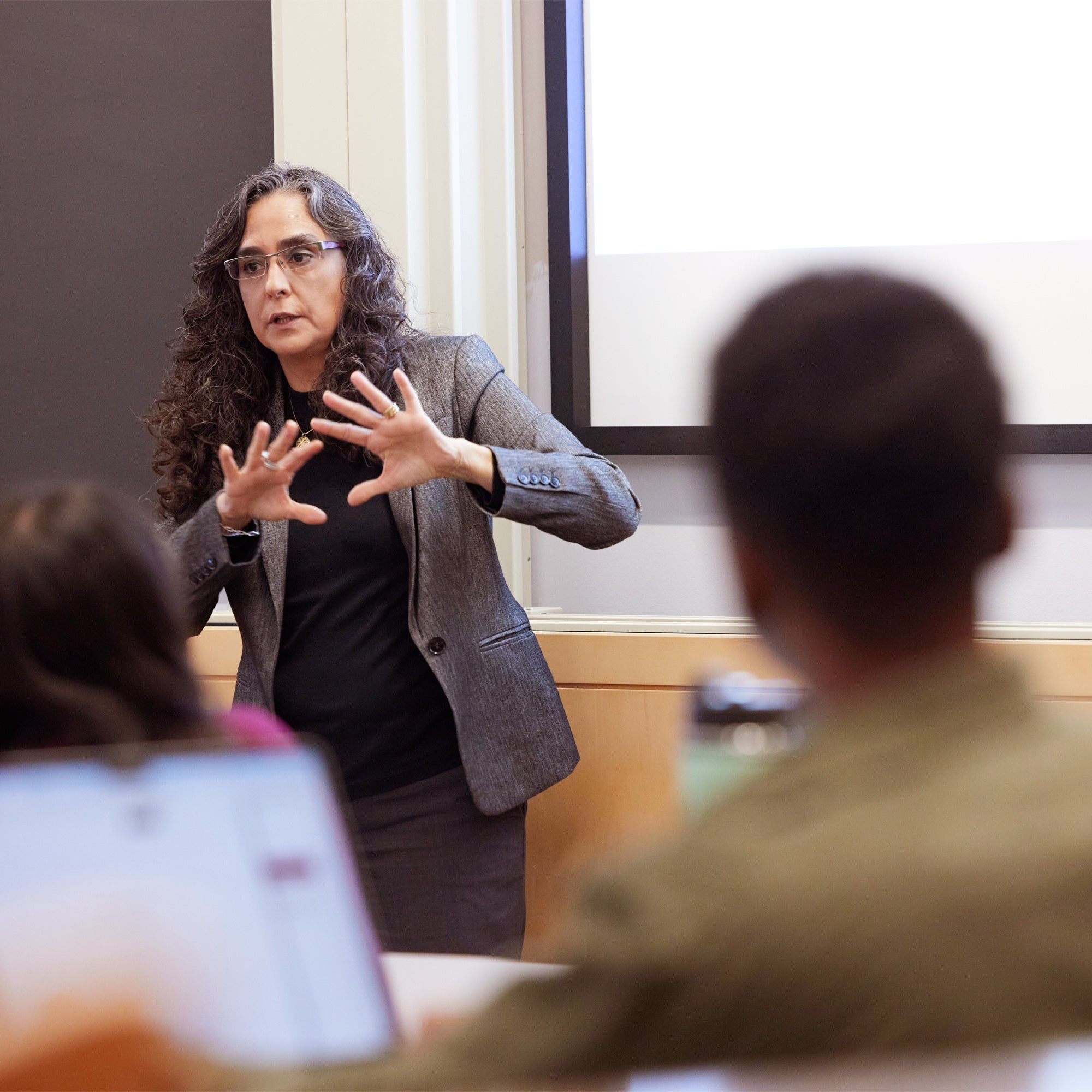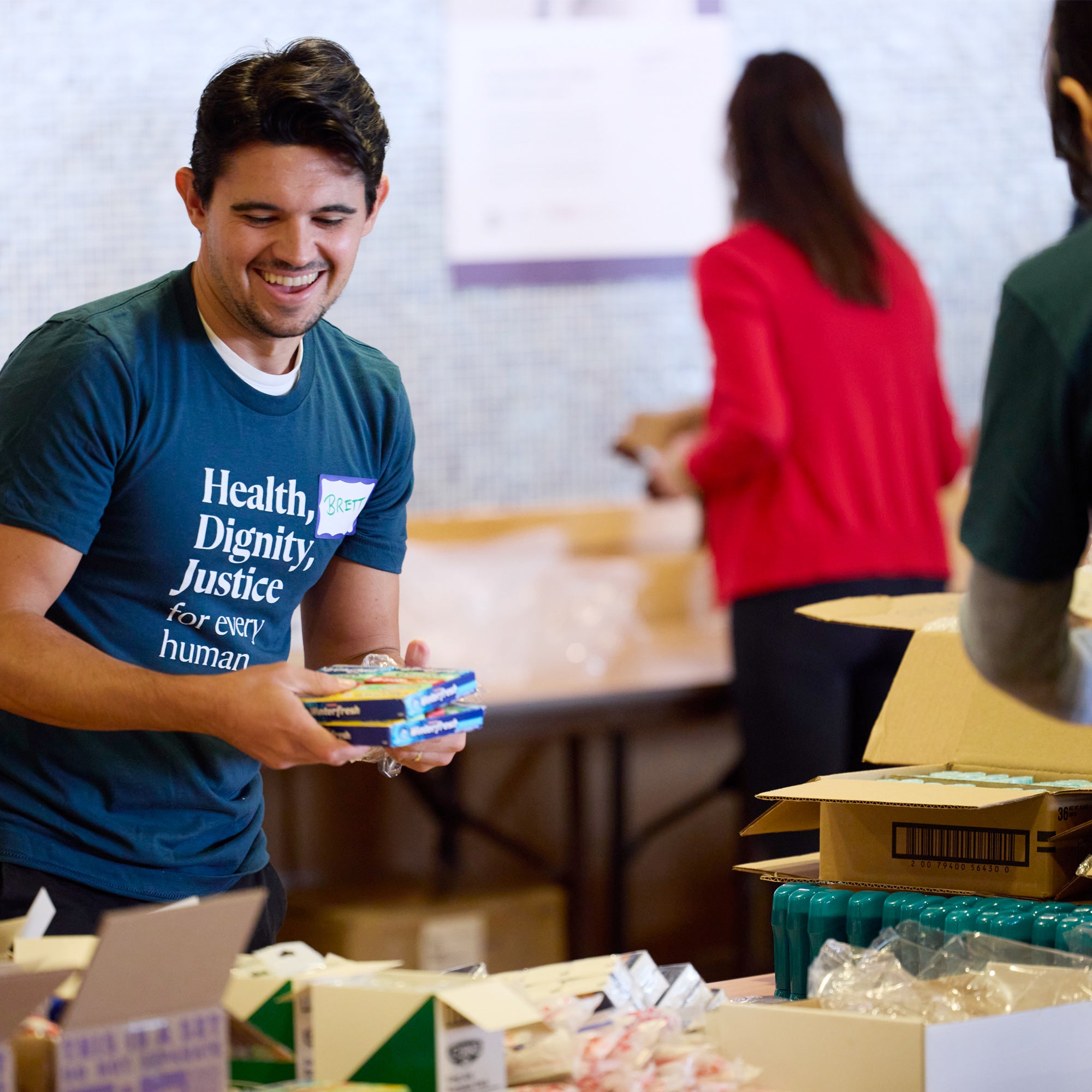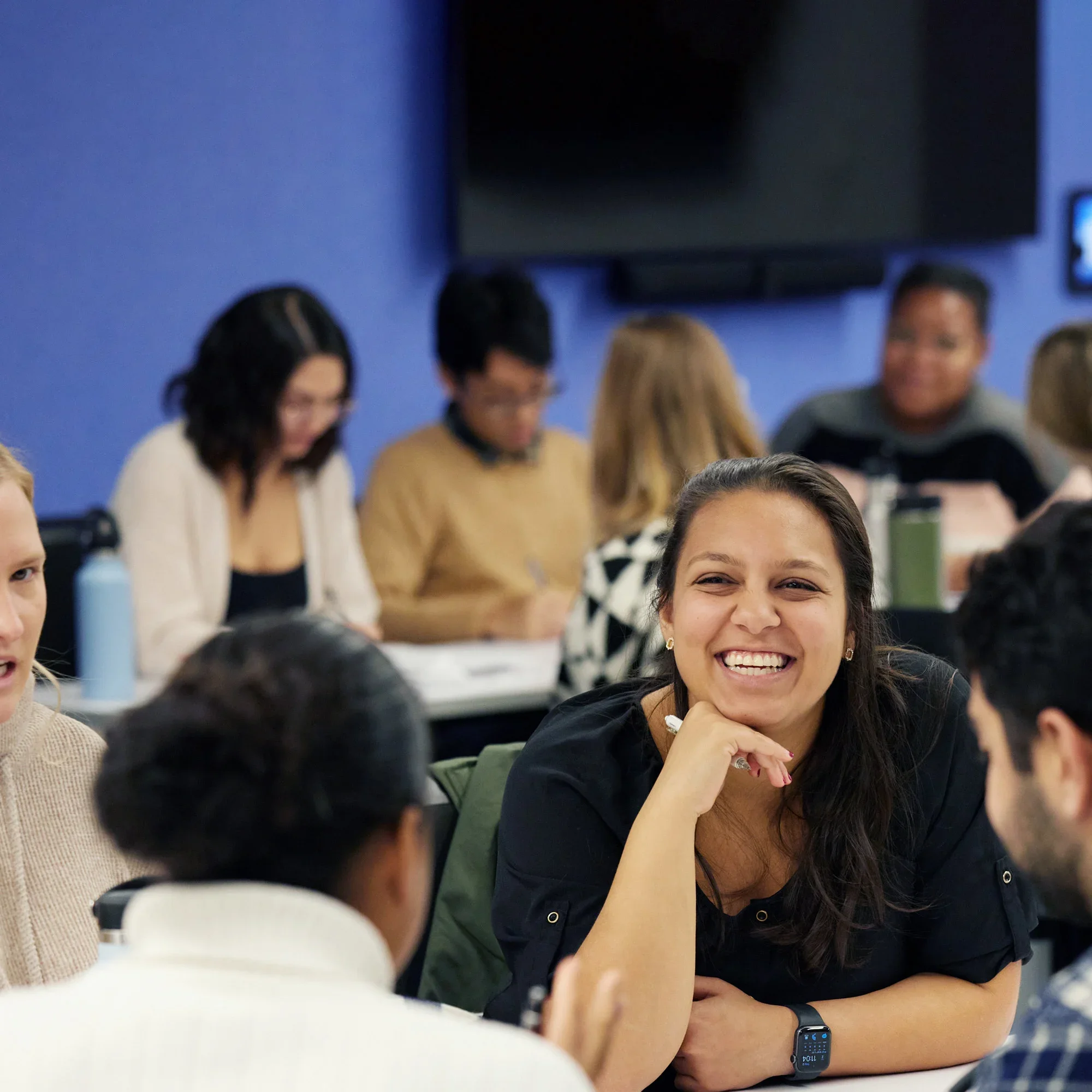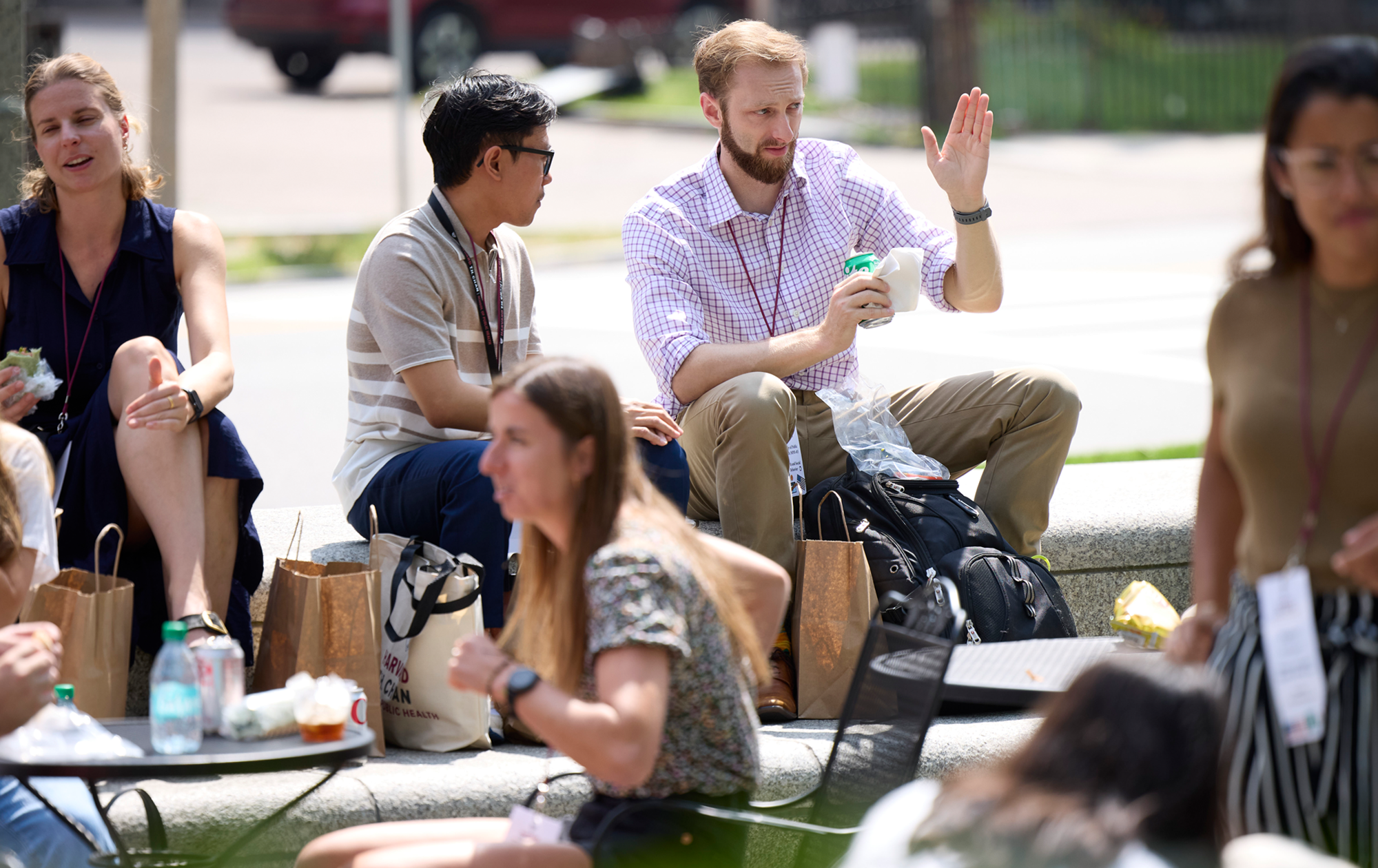

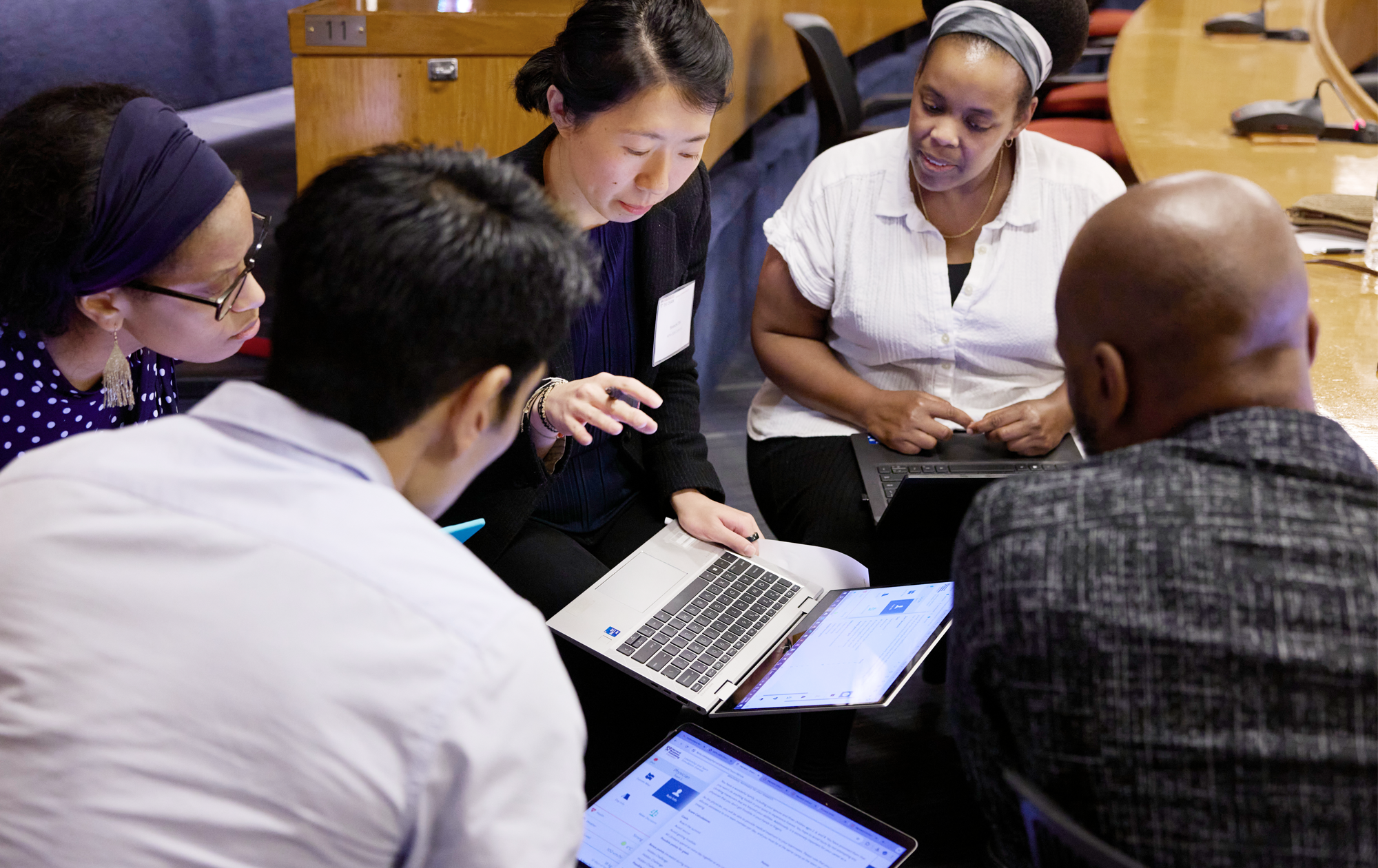

A dozen HSPH students traveled to Bangladesh during WinterSession for a course directed by Ajay Mahal, Assistant Professor of International Health Economics, and Richard Cash, Senior Lecturer on International Health. From l to r, Hirshini Patel and Julia Rubin Smith of HSPH, Tasfiyah Jalil of BRAC, Nitin Kapur and Lisa Wolfe of HSPH, Taymon Domzalski of Duke University, Christine Parkins and Jen Pomeranz of HSPH, and Sabiha Chowdhury of BRAC
A group of 30 women sit with legs folded neatly beneath them, wrapped in colorful saris and listening intently as a community health worker discusses tuberculosis. The worker points to pictures in her flipchart to teach the women how to identify the disease. One of the translators traveling with our group of 12 HSPH students explains that the information is new to some of the village women, but is also a review for those who have long attended the monthly educational meetings, where topics range from steps for healthy pregnancies to oral rehydration therapy for diarrhea. It is striking how intently the women listen to the community health worker, perhaps knowing that the charcoal circles smudged on their babies' foreheads to ward away evil are not enough to keep their families healthy.
It is January 2006, and we are in Bangladesh. The Bengali people are fiercely determined to ensure that their 35-year-old nation continues to develop. With the help of nongovernmental organizations, public health is gaining a foothold in the country's villages and towns. Our group spent a month working with the Bangladesh Rural Advancement Committee (BRAC) and the International Center for Diarrhoeal Disease Research, Bangladesh (ICDDR,B), both of which are focused on improving the health of Bangladesh's poor.
BRAC—whose mission is "alleviation of poverty and empowerment of the poor"–uses a combination of programs including microfinance for women, health education, health services, and elementary education to improve the health of Bangladesh's poor. In particular, the microfinance program–which provides small-scale, low-interest loans to village women–helps families increase their income and, therefore, their health levels, according to BRAC. The village women were extremely proud to show us their loan-financed projects-ranging from sweet shops to livestock–and told us that they encouraged their neighbors to take out loans as well. BRAC also brings community health workers to the villages to provide health education, identify villagers who need medical care, and sell low-cost medications, contraceptives, feminine products, and sterile birthing kits. Finally, by providing elementary schools where there are no government schools, BRAC is working to further improve health through poverty alleviation. The schools provide an education for 11 percent of Bangladesh's elementary school students, 65 percent of whom are girls.
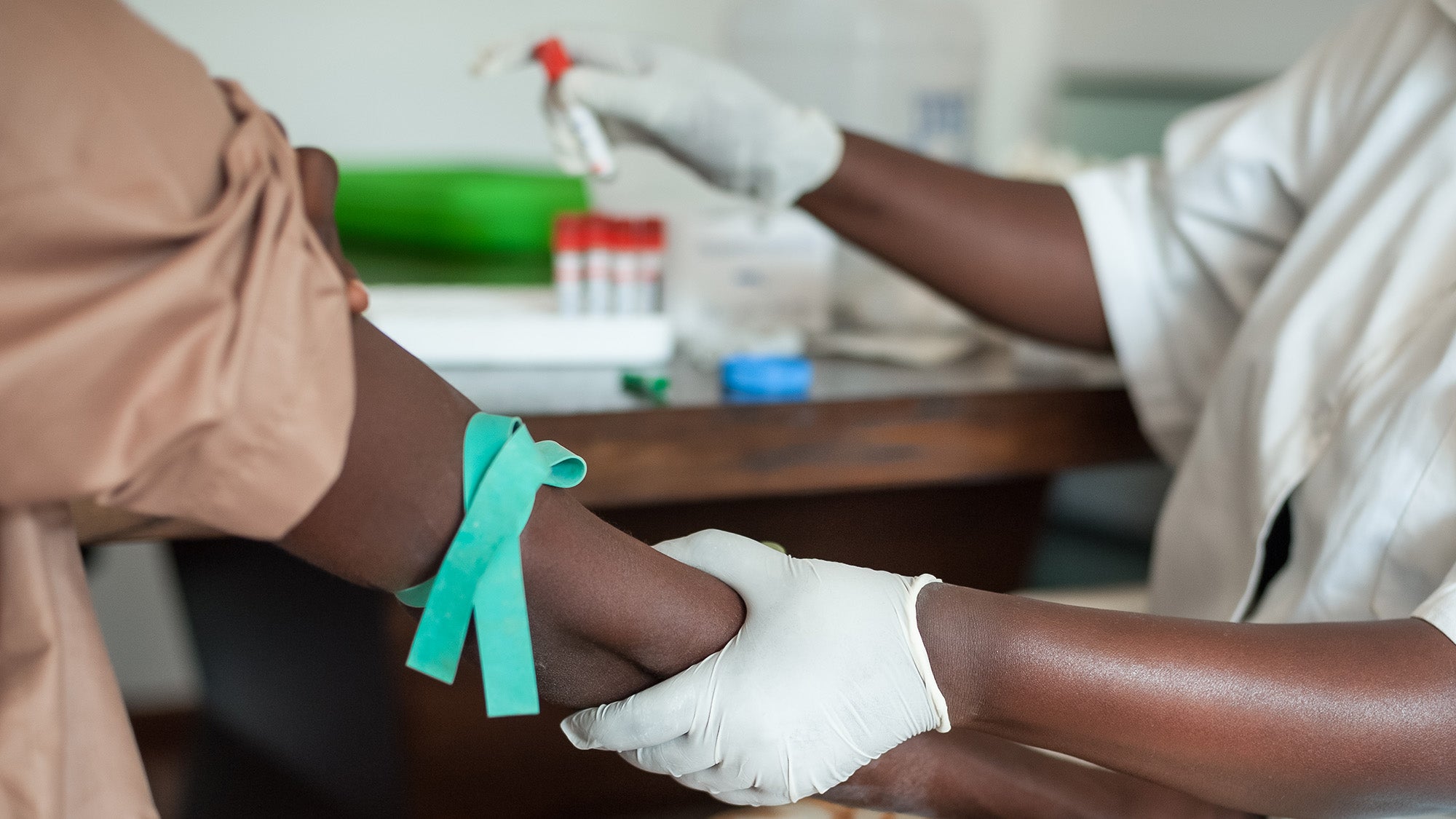
ICDDR,B—whose mission is "to develop and promote realistic solutions to the major health, population, and nutrition problems facing the poor people of Bangladesh and other settings"—is currently running the largest population health research study in Bangladesh. ICDDR,B uses its research for such health-promoting activities as prevention of diarrheal diseases, care of low birth weight infants, and treatment of arsenic poisoning. ICDDR,B officials noted that they share the results of their research with the government to inform policymakers and that they urge them to address emerging issues such as HIV. Similar to BRAC, ICDDR,B works to bring health services to rural communities through community health workers and specialty clinics.
Farmers at work
Similarly, one of our nutrition students is disappointed that women do not receive folic acid until three months into pregnancy. Abortions are illegal in Bangladesh, although women can receive them during the first three months of gestation with the consent of a husband or father under the guise of "menstrual regulation." Our reproductive health students are disturbed that women cannot receive a legal abortion outright, but are relieved that a trick of semantics allows for one option.
Bangladesh—a country of beautiful waterways, thriving agricultural fields, and industrious people—can boast significant health accomplishments, such as falling infant mortality and rising life expectancy. Nevertheless, the opportunities for health improvement are vast, and any public health professional could certainly spend a lifetime learning from and working in Bangladesh.
—CP
Copyright, 2009, President and Fellows of Harvard College