

image image Harvard Public Health NOW
image

Search Archives
image
November 14, 2003
SARS in China: CDC Official Maguire Describes the Story of What Happened

image
James Maguire
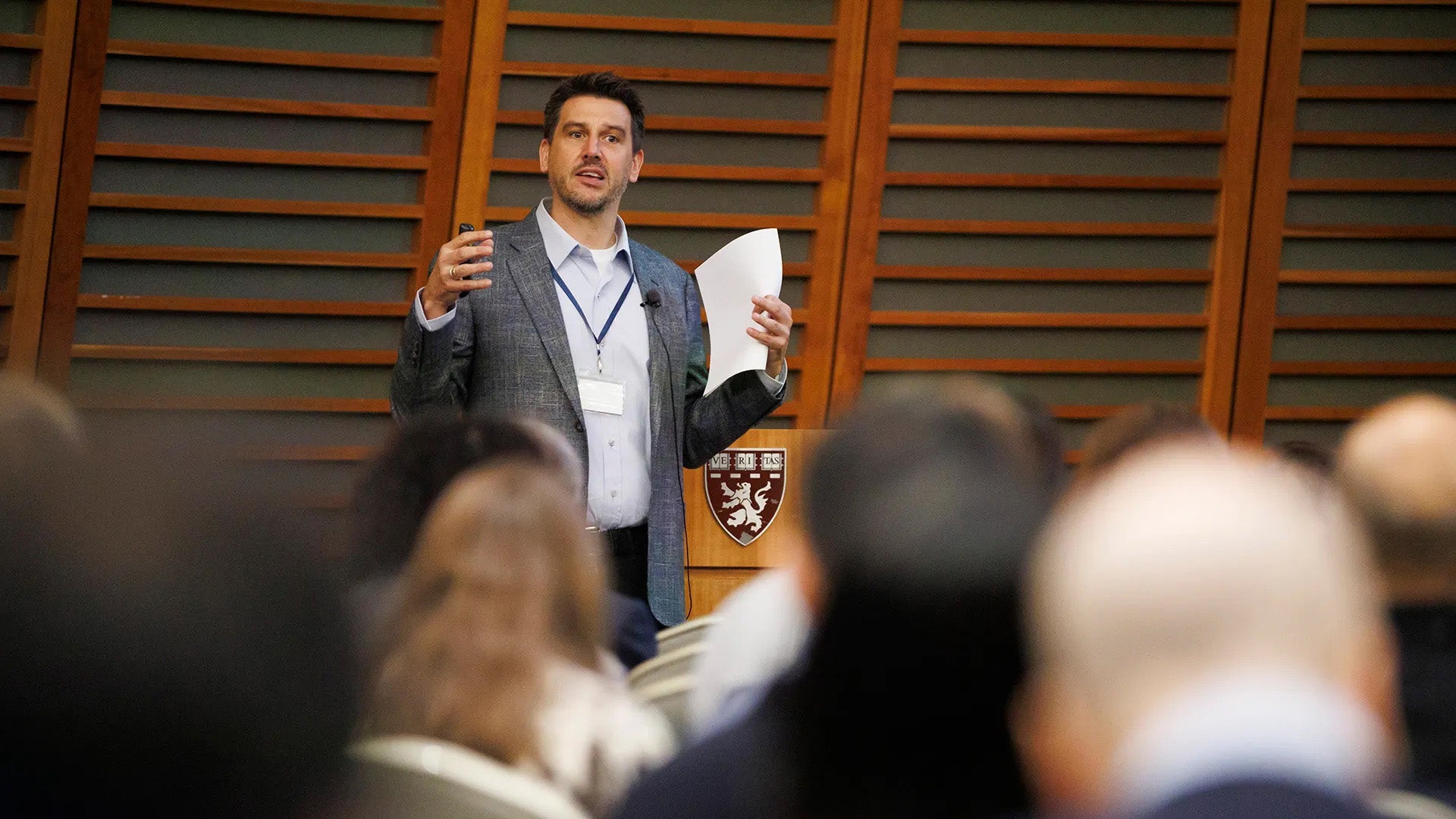
From mid-March to the end of May last spring, James Maguire, chief of the parasitic diseases branch of the National Center for Infectious Diseases and former HMS and HSPH faculty member, investigated the SARS epidemic in the country where the first cases were discovered. He described his experiences as a member of a World Health Organization (WHO) team sent to China in front of a packed audience in K502 on October 30. "SARS in China: The Story of What Happened" was sponsored by the Office of the Dean and the Program on Infectious Disease Epidemiology.

While the Chinese government and its health officials were criticized by the media and international community for mishandling the SARS outbreak earlier this year, especially for allegedly concealing information, a more systematic review of events has revealed that many measures undertaken by officials worked effectively to contain and quash an infectious disease that at times appeared to be spreading out of control.

China managed an estimated 5,327 cases of SARS, including at least 349 deaths, with large-scale quarantines, mandatory fever screening checkpoints, arrival and departure monitoring at airports, population-wide surveillance, community infection control and the designation of SARS-only hospitals, Maguire said.

The United States, by contrast, had 27 probable cases, only a handful of which were confirmed. This country may have avoided a SARS outbreak similar to the one in China only through a mixture of good public health and luck, noted Maguire.

The first SARS case arose in Guangdong province as early as November 16, Maguire said, but this became apparent only through a retrospective analysis by Chinese health officials in January, after health officials in Guangdong were seeing clusters of severe pneumonia-like symptoms. During the next two weeks, clinicians and health officials concluded they were dealing with a new disease. They developed protocols, which they adapted to incoming information about the virus, including treatment recommendations, hospital infection control, community surveillance and case reporting–all of which were written up and distributed throughout the province and later throughout China.

News about a virus outbreak reached the rest of the world the second week of February, when the outbreak was peaking in Guangdong. Many cases arose in hospitals, where the virus was spreading to other patients, staff and visitors. The province saw its last case in health care workers in late March, thanks to basic infection control principles, Maguire said. Even rudimentary personal protection gear seemed to offer significant protection. Hospital staff worked under hot and challenging conditions. They wore three layers of clothing and hand-sewn gauze masks when standard-issue masks were depleted. They turned off air conditioning systems and set up fans that blew air–and germs–out through open windows, instead of around the hospital. They isolated SARS patients and banned visits from family members.

Maguire and his team learned about these measures on a hard-won visit to Guangdong. They arrived in Beijing on March 22, the third WHO team to visit China, and their first requests for more information and to visit the province were granted only after they held a press conference, he said. By then, similar cases had been reported in 15 countries. In February, the Chinese minister of health assured media and world health officials that everything was under control–and in fact, at that time, the epidemic in Guangdong was beginning to come under control, Maguire said.

The health minister asked the WHO team to develop a SARS report for Beijing, a city of 11 million people. Maguire and his colleagues found more cases than officially reported, as well as problems in surveillance systems and communication breakdowns between different sectors of the health care system, especially between civilian and military hospitals. Meanwhile, the news media was reporting rumors of patients being smuggled away to avoid WHO detection, but Maguire said those reports were mistakenly rooted in transfers of cases to hospitals more equipped to deal with the outbreak. Nonetheless, the mayor of Beijing and the health minister were sacked for what was described as mishandling the situation.

In late April, the SARS epidemic appeared to be out of control in Beijing, with 150 new cases being officially reported each day. Overwhelmed hospitals inadvertently helped spread the disease. Patients reported to non-SARS hospitals, where they waited in emergency rooms for several hours, infecting others. People became suspicious of hospitals, avoiding and even trying to escape from them.

On April 20, China’s government responded more visibly to the desperate situation. The major national May 1 holiday was cancelled to prevent large movements of people out of the city. Schools were closed, unless there was a recent exposure, and then they were quarantined. Officials devoted eight more hospitals to SARS, transferring patients and remodeling specialty facilities, such as orthopedic and chest hospitals, within a week. When that was not enough, they built a 1,000-bed, one-floor hospital in one week. "It was amazing," Maguire said.

"One thing that was extremely important was the meticulous attention they paid to hospital infection control," Maguire said. Students at the local schools of public health volunteered to watch clinical staff put on and take off their protective clothing to make sure they did not inadvertently contaminate themselves or others. "It was a brilliant idea," he said, for a hospital staff that was exhausted and overburdened by SARS cases, including many of their colleagues who became sick and died from their efforts. By June 10, no new cases were reported in Beijing.

A trip to two rural provinces that were largely unscathed by SARS, Hebei and Henan, helped Maguire and his team understand how the provinces prevented outbreaks like the one that had gripped the capital. Millions of migrant workers had ignored official requests not to return home to the provinces, and they were greeted by blockades. There, everyone, even the highest-ranking health officials, had to register for daily temperature monitoring. "Our temperatures were taken seven to nine times a day at these fever screening stations," Maguire said.

Each village implemented community-based surveillance, structured around doctors, community leaders and household groups. People with symptoms were quarantined and isolated. Volunteers brought food to their doors and tended their fields. The whole community was involved and educated. "Everyone was looking for people with fever," he said. "If you had a fever, I don’t think there was anywhere you could hide."

China missed several opportunities to be the first to report scientific discoveries about SARS, Maguire said. Much of the epidemiological, clinical and outcomes data went unexamined, and results of investigations were not published. However, at the end of the day, he noted: "China was able to stop the SARS epidemic. There is a lot to be learned from what China did."

--CCM


Harvard Public Health NOW is published biweekly by the
Office of Communications
Harvard School of Public Health
665 Huntington Ave., SPH 1-1312
Boston, Massachusetts 02115
617-432-6052
Editor and Layout: Christina Roache
Contributing Writer: Paula Hartman Cohen, Carol Cruzan Morton
Calendar Editor: Melitta King
Photos Credits: Suzanne Camarata, Richard Chase, Paula Hartman Cohen, James Maguire, Christina Roache


Archived Issues || HSPH Home

Copyright, 2007,  President and Fellows of Harvard College

Around the School Exams and Defenses Harvard's Role in Helping Public Health Crises in Africa Discussed at HSPH Event Calendar Reorganization Offers More Efficient and Integrated Student Services Archived Issues Office of Communications Promotions and Appointments Winners of Fellowships Announced in Several Programs GPTW and Operations Effort Installs New E-Mail Kiosks around HSPH Survey Shows Massachusetts Residents Committed to Providing Health Coverage for Uninsured but Are Uninformed HSPH Hosts Research!America Distinguished Speaker Series to Begin with Cutter Lecture and Sachs Talk Speizer and Willett Win Prestigious David E. Rogers Award Harvard Annual Fundraising Campaign for Charities Under Way