image image Harvard Public Health NOW
image

Search Archives
image
October 29, 2004
Altshuler Describes Emerging Methods for Researching How Genes and Environment Combine to Cause Disease

David Altshuler
David Altshuler
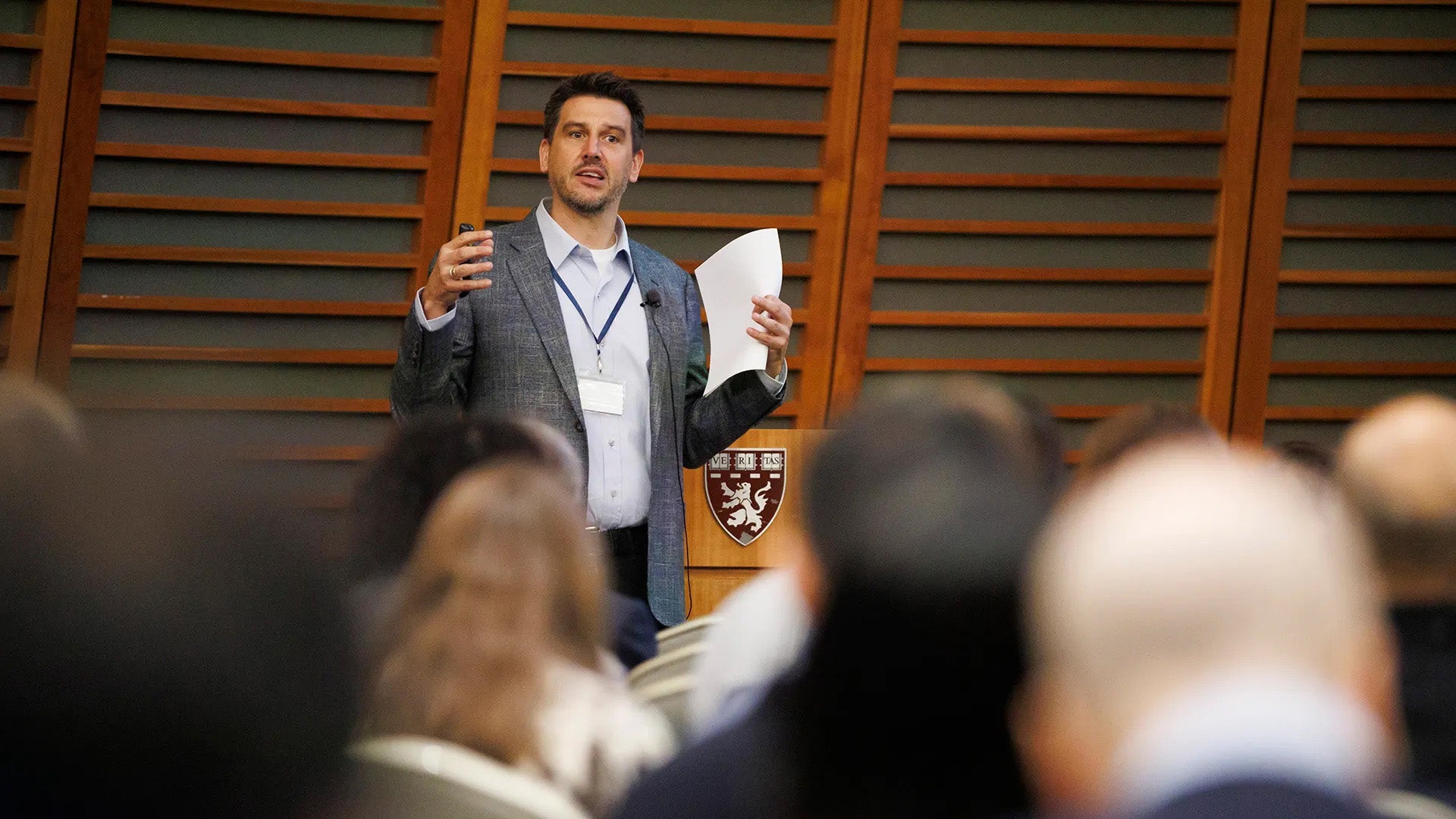
Type 2 diabetes and other common diseases may run in families, but the guilty genes have largely eluded scientists. Emerging methods for looking at the genome and inheritance may speed up the search to figure out how genes and the environment combine to cause disease, said HMS Associate Professor David Altshuler at the first Dean’s Distinguished Lecture of the 2004-2005 academic year on October 13 in Kresge 502. This year, the lecture series aims to stimulate interaction and collaboration across Harvard.

In his introductory remarks, HSPH Dean Barry Bloom said that two years ago, Altshuler, along with Mark Daly of the Whitehead Institute, and their colleagues published, "one of those rare papers that changed the paradigm of the way we think about the genetics of populations. Genes move not as Mendel envisioned, as independent beads on a string, but in blocks. It’s an entirely new approach to characterizing genes and linkages in the population."

Most people tend to think of individual genetic mutations as the disease-causing units of inheritance. Indeed, unusual variations in single genes with big effects underlie 1,300 uncommon human diseases, including sickle cell anemia, muscular dystrophy, cystic fibrosis, Huntington’s disease, and rare forms of many common diseases, such as type 2 diabetes, hypertension, and breast cancer, said Altshuler, associate professor of genetics and medicine at HMS and a physician at MGH. He is also a member of the Cambridge-based Broad Institute of Harvard and MIT and director of the Medical and Population Genetics Program there.

Common diseases, on the other hand, stem from variations in numerous genes that can result in small effects that may add up over time. That idea became feasible to investigate with the identification of the human genome sequence and new methods to study its variations. Using these tools, Altshuler and his colleagues discovered that DNA seems to travel in long blocks, called haplotypes, from one generation to the next, with little genetic shuffling. The genetic variation within most of these blocks comes in only four or five patterns, according to a paper by Altshuler and his colleagues published in the June 21, 2002 issue of Science. European, African, and Asian populations share about half of the five common patterns found along any given stretch of DNA.

The findings grew into the International Hap Map Project at eight sites, including the Broad Institute. There, Altshuler and his team are cataloguing the common haplotype variations in the genomes of 270 people of European, African, Chinese, and Japanese origin. They want to map the 8.8 million single nucleotide polymorphisms, or SNPs (pronounced "snips"), which are small genetic changes along the genome. The pattern of SNPs in each person’s genome is as unique as a fingerprint, but the researchers report rapid progress in finding common SNPs across diverse populations. Then, they will define the correlations that form the common haplotype blocks.

"Many obese people never get diabetes, and some people who get diabetes never get the complications," said Altshuler. "The reasons for this individual susceptibility are a complete mystery. We need to understand the pathways responsible before we can intelligently develop strategies for prevention and treatment."

If the researchers succeed, the biggest payoff will be insights into the underlying pathophysiology of common diseases, such as diabetes. That may lead to interventions useful for large populations, said Altshuler. In most cases, he said, the genetic information is unlikely to lead to personalized predictive medicine because the genetic signature will be either common and weak–as Altshuler believes–or rare and hard to study, as others contend.

More rigorous statistical standards are evolving with new tools to probe the roots of disease, but the field is still young. "We’re heading toward a modest number of exciting discoveries and a large number of false positives," he said. "A small fraction of what is published proves reproducible."

--CCM


Harvard Public Health NOW is published biweekly by the
Office of Communications
Harvard School of Public Health
665 Huntington Ave., SPH 1-1312
Boston, Massachusetts 02115
617-432-6052
Editor and Layout: Christina Roache
Contributing Writers: Michael Lasalandra, Carol Cruzan Morton
Photos Credits: Suzanne Camarata, Richard Chase


Archived Issues || HSPH Home

Copyright, 2004,  President and Fellows of Harvard College

Office of Communications Archived Issues Around the School Altshuler Describes Emerging Methods for Researching How Genes and Environment Combine to Cause Disease What Polls Predict about Upcoming Presidential Election New Training Grant Will Establish HSPH Roadmap Fellows Annual State of the School Address Draws Standing-Room Only Crowd Calendar Exams and Defenses