
![]() |
![]() |
![]() |
![]() |
|
![]() |
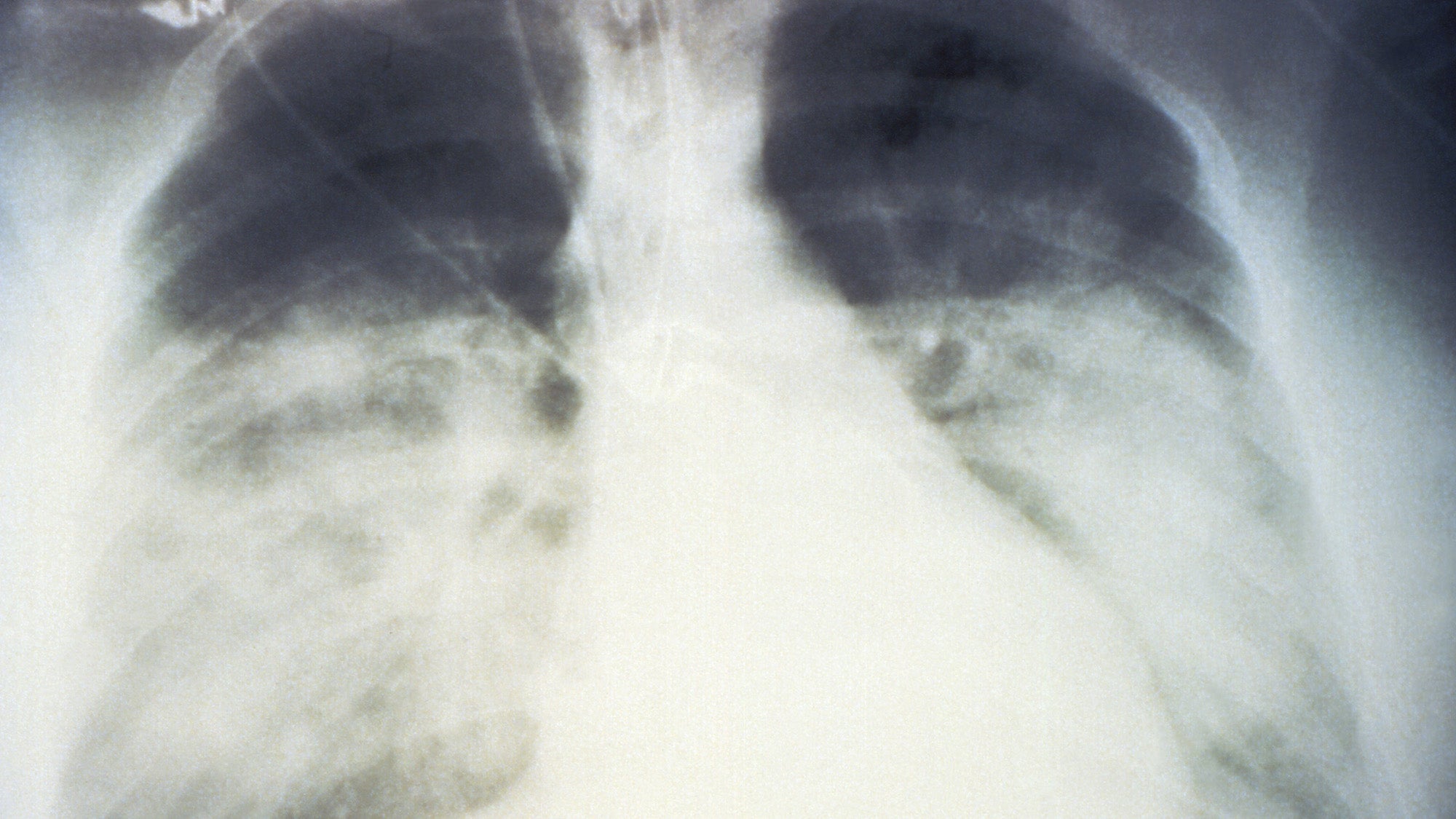
The finding was described in the May 6 issue of Nature. "We explored a specific mechanism within the context of asthma, but I think the reason the work was published in a more general-interest journal is that the concept behind the mechanism is simple and could explain findings from different fields, even those not focused on asthma itself," said Tschumperlin, who is assistant professor of bioengineering and airway biology in the Department of Environmental Health. In asthma, substances such as allergens irritate the airways and cause the smooth muscle cells around them to contract. With repeated attacks, lung tissues become damaged from cycles of inflammation and repair. Scar tissue forms, which forces the airways to change their shape, or remodel. The airway walls become abnormally thick, potentially interfering with breathing. Figuring out how to stop the thickening is a common goal among asthma experts. Now, Tschumperlin and his colleagues have suggested a possible additional explanation for why the airways thicken, providing another research target. The work required the expertise of physicians, cell biologists, physiologists, engineers, physicists, and mathematicians, representing several institutions.
Another well-known MIT bioengineer, Douglas Lauffenburger, and his team worked on pinpointing the specifics of the biochemical pathway that had been detected. He developed a quantitative model to calculate the distribution of proteins among epithelial cells when the airway constricts. What Tschumperlin found surprised him. The cell culture model suggested that during airway constriction, fluid that normally surrounds epithelial cells gets squeezed through bordering tissue linings and carried away. The epithelial cells become uncomfortably pushed together, a situation the cells detect as abnormal. In response, the epithelial cells trigger the release of growth factors. These growth factors likely contribute to collagen deposition, helping to separate the cells but also resulting in thickening of the airways, a hallmark of asthma, said Tschumperlin.
"Without these kinds of collaborations, we would have been left with a biochemical pathway with no deeper understanding of the connection between the physical mechanism and the biochemical mechanism," said Tschumperlin. Beyond the obvious implications for asthma research, the cell culture model represents a new understanding of how a biochemical pathway can be jumpstarted by changing the environment around a cell. "Standard understanding of mechanical stress signaling to cells is that it must deform the cell itself, the cytoskeleton, or some protein within the cell," explained Tschumperlin. "Whats unique about the mechanism we described is that it occurs as a result of stimuli outside of the cellthe deformation is of the space around the cells. No one had really thought of extracellular means for sensing mechanical stress before." Tschumperlin believes this new-found recognition can be used in a wide range of experiments involving biochemical pathways. "The mechanical environment is crucial to how cells normally grow during development and also how they grow abnormally during cancer," he said, "so there are potential connections between cells sensing changes in their mechanical environments and lots of important biological questions." Harvard Public Health NOW is published biweekly by the Office of Communications Harvard School of Public Health 665 Huntington Ave., SPH 1-1312 Boston, Massachusetts 02115 617-432-6052 Editor and Layout: Christina Roache Contributing Writers: Paula Hartman Cohen, Courtney Humphries Calendar Editor: Melitta King Photos Credits: Suzanne Camarata, Richard Chase, Daniel Tschumperlin, Christina Roache, Lucian Leape, Howard Koh, Miranda Loh Archived Issues || HSPH Home Copyright, 2009, President and Fellows of Harvard College |