

image image Harvard Public Health NOW
image

Search Archives
image

Researcher Goldie Campaigns for Cervical Cancer Screening Options in Developing Countries

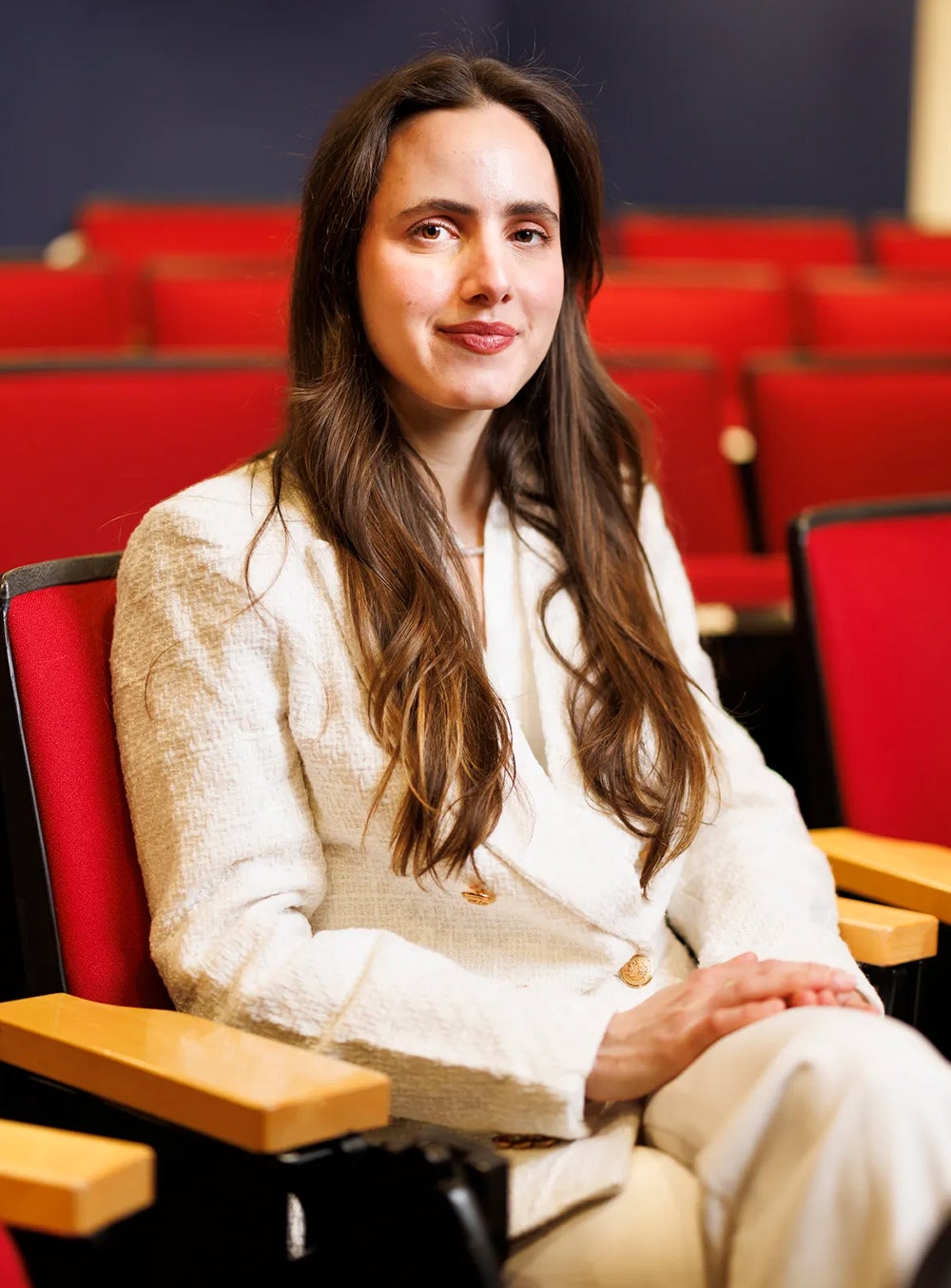
Sue Goldie Nearly 200,000 women die each year from cervical cancer, a preventable disease, in developing countries. Sue Goldie, assistant professor of health decision science in the Department of Health Policy and Management, aims to buck that trend. She has launched a campaign for simple, effective, and affordable screening methods to become a standard of care in developing countries.

Scientists have learned much about cervical cancer in the last decade, including that human papillomavirus (HPV) causes the disease and that women with persistent infection are at the greatest risk of developing serious precancerous lesions, said Goldie.

"Data continue to accumulate documenting the ability of new screening options to detect these lesions and remove them before they develop into invasive cancer," said Goldie. "Women in the United States have directly benefited from this information, but unfortunately, there has been no change whatsoever in the mortality due to invasive cervical cancer in poorer countries, where the vast majority of disease occurs."

In the United States, women receive Papanicolaou (Pap) smears that aid the early identification of precancerous lesions. If abnormalities in a smear are detected, women may be required to visit the doctor two more times, to confirm the diagnosis and then remove the lesions. Such screening has resulted in widespread reductions in cervical cancer in developed countries.

Repeated visits and complex laboratory set-ups to interpret Pap smears are not practical or feasible in developing countries, said Goldie. Even in resource-poor countries that provide Pap smears on a limited basis, screening has often been targeted to young women, usually in their 20s, attending antenatal clinics. The approach has been largely ineffective because women in their 20s are at relatively low risk for developing cervical cancer. Health care and its delivery in these countries are less available to women in their late 30s and early 40s, when cervical cancer screening could provide the most benefit, said Goldie.

Goldie and her colleagues have used decision analytic methods and mathematical modeling to analyze cervical cancer screening options. They found two methods could work particularly well in low-resource settings.

One approach, called direct visual inspection (DVI), requires that a mid-level health care provider apply acetic acid (vinegar) to the cervix and then look for abnormal areas that turn white in response to the solution. DVI is cheap (less than $1 per screening), and its costs are more than recouped by the savings realized by preventing women from developing full-blown cancer, said Goldie.

An alternative screening method tests for cancer-causing types of HPV. Although more expensive than DVI, the process can be automated so that a simple cervical swab provides highly reliable results at minimal cost. The swabs could also be collected by the women themselves.

Both methods perform comparably or better than conventional Pap smears, and providing either one at least once in a woman’s lifetime, coupled with immediate treatment for those with positive results, could reduce the incidence of cervical cancer by one-third, said Goldie.

Goldie and her colleagues published their findings in the June 25 issue of the Journal of the American Medical Association. The study has met resistance by some policymakers, who argue that the alternative screening methods are not the standard of care that US women receive and that immediately treating all positive results will lead to some women receiving unnecessary treatment.

Goldie responded that some screening is better than no screening and that "the decision to do nothing because we cannot provide the identical level of care in poor countries represents an active decision, and the consequences of that decision result in 50,000 otherwise preventable deaths."

She added that the usual treatment for precancerous lesions offered in developing countries, cryosurgery, is associated with very few complications.

"The complications are minimal compared with the 5 percent lifetime risk of cervical cancer estimated in some of these regions," said Goldie.

Goldie has made translating her and her colleagues’ findings into policy a major priority. She has presented at international meetings and to expert advisory boards, received international media coverage, and distributed a monograph (Risk in Perspective, July 2001, a publication of the Harvard Center for Risk Analysis) to more than 2,000 policymakers.

She said she welcomes the criticism and commentaries in response to her study, viewing them as opportunities to explain the methodology she used more comprehensively, incorporate additional data sources, and analyze other strategies by considering regional-specific issues raised by policy makers.

The next phase of Goldie’s work involves a National Institutes of Health grant that brings together US and international work. She plans to create an HPV policy model to serve as an analytic tool, synthesizing data available for any given region in the world. The model would help optimize the design of clinical guidelines, health policy, and health-services delivery programs for the prevention of cervical cancer in different regions of the world.

"This type of study can help to facilitate a bridge between the use of the best scientific evidence available and the development of policies that could help a lot of women," said Goldie.


Harvard Public Health NOW is published biweekly by the
Office of Communications
Harvard School of Public Health
665 Huntington Ave., SPH 1-1204
Boston, Massachusetts 02115
617-432-6052
Editor and Layout: Christina Roache
Photos Credits: Richard Chase, Christina Roache


Archived Issues || HSPH Home

Copyright, 2009,  President and Fellows of Harvard College

Office of Communications Archived Issues HSPH Gathers for Support in Wake of Attacks Students Organize Support for Relief Efforts Around the School Exams and Defenses Calendar Cartoon: Mission Hill Walk for Health