![]() |
|||||
|
|
|
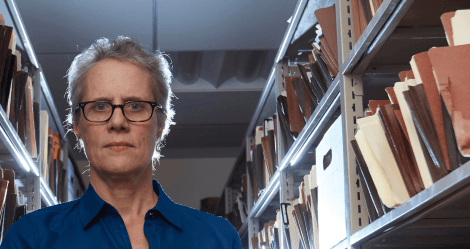
It had taken the man eight days to walk from the east coast of Sumatra to the west. Over all that time and perhaps 75 miles, he'd had little to eat or drink. By the time mother and son found each other, the man was desperately sick. Remarkably, both had survived the horrific double disaster that hit Indonesia on the morning of December 26, 2004. First, the seafloor just off the coast slipped, triggering the strongest earthquake recorded anywhere on earth in more than 40 years. Then, within an hour, a giant tsunami heaved millions of tons of muck across Aceh, taking down everything and everyone in its path. "These two people, mother and son, pierced every emotion I had," Moresky says. "I don't know how, but they'd been miraculously reunited." Moresky, founding director of international emergency medicine at New York-Presbyterian University Hospitals of Columbia and Cornell, was beside herself. "I had no oxygen, lab, or X-ray machine," Moresky recounts. "All I could do was put in an I.V. line. I was holding back tears as I made the decision to transfer him to the main hospital, which wasn't even equipped to intubate him, if it came to that." The son made the 35 kilometer trek by van. She never heard what happened to him.
Shortly after New Year's, the IRC directed them to report to Indonesia within 72 hours. Both docs traded shifts and leave time with colleagues in their respective ED's, ensuring coverage for a month. According to the IRC, their task was to "increase access to potable water and sanitation facilities, deliver urgent primary health care, distribute emergency supplies, and provide psychosocial aid for survivors." Moresky, 36, and Cranmer, 38, left on January 7 to join other IRC emergency workers from around the world. The two would serve as health officers on a team that included other physicians, nurses, a child protection coordinator, environmental engineers, logistics specialists, and others who could assist in infrastructure recovery. Some were local and had lost many loved ones. "We weren't sure whether we'd be carrying bodies, performing amputations, delivering babies, or working on measles campaigns," Moresky says.
Their translator told them their driver had lost his wife, children, parents, and siblings. "Listening to that wrenching story," Moresky says, "I decided not to inquire about the personal tragedies of every patient unless medical or psychological necessity required it." One day, a young man brought a 14-month-old boy to the clinic. Cranmer noted his clean diaper and found no sign of injury or disease. In fact, she thought to herself, this was probably the healthiest baby she had seen so far. "I told him his son was fine, and the man was thrilled," she says. He said the little boy was all he had left. A DIFFERENT
LENS What once had been a resource-rich region now lay in ruins. Proud, industrious rice farmers and shrimp fisherman had lost families, homes, animals, boats. Millions of tons of ocean had uprooted forests and fields, and left deep gullies in place of roads. Moresky found solace in hard work among the children in the camps. "It was incredible how open people were," she says. Although they lived in an area that had been under constant conflict long before the tsunami, many of Aceh's young had retained their ability to smile. One day at a refugee camp, Moresky found few children at the measles vaccination site. Parents were wary of vaccination, and kids were scared. So she took off on a run through a soccer field in her heavy boots, gesticulating madly and calling out to 50 to 60 youngsters playing there. Her pale skin and men's clothing fascinated them. Like the Pied Piper, she led a band of laughing children to the site, where their parents consented to the shots. " Emergency physicians are trained to expect anything that comes in the door, so we're better prepared than most to handle a situation like this," says Cranmer. Accustomed to seeing patients one at a time, she and Moresky had learned at HSPH to see the disaster through the lens of public health. POTENTIAL MEASLES EPIDEMIC Like this one girl, many children had never been vaccinated, in part owing to their parents' fears. Now, vaccination was imperative. " It takes but a single case," Cranmer explains. In a crowded refugee setting like this, they could expect a 25 percent mortality rate, or worse. That case launched a massive public health effort to identify, treat, and immunize every child in every camp and home the girl had visited. Each day brought fresh
challenges. In emails posted on the IRC website, Cranmer told how
they coped: There is a well, but the water is thick and brown. We have these packets called PUR that you can add to 10 liters of water, and it congeals all the solid stuff together at the bottom of the bucket. Then you pour it through a towel and you have water that is still yellow. So just like snow, no drinking yellow water. We can use it for basic cleaning and rinsing, though. The acceptable number of liters of water a day that a patient in a hospital requires in an emergency is 15, a worldwide standard. Now, they barely get one here. On her last day in the country, Cranmer did a follow-up exam on her young measles patient. The girl and her mother arrived by motorcycle, and left without bothering to put on their helmets. Cranmer took this nonchalance as a sign of healing. Her tsunami experience left her with "a different set of eyes" for seeing patients back in Boston. "I never see patients [suffering from many diseases found in Aceh]," she says, "unless they are immigrants or refugees. Nor do I see this level of poverty--the absolute lack of anything material." Moresky, compelled by the Indonesians' resilience and her own small triumphs, will go out again with the IRC. She doesn't know when.
Paula Hartman Cohen has written about science for Newsday and other national publications. She is a regular contributor to HSPH's newsletter, Harvard Public Health NOW. |
||||
| This
page is maintained by Development Communications in the Office of Resource
Development. To contact us with suggestions, comments, and questions, please e-mail: editor@hsph.harvard.edu Copyright, 2005, President and Fellows of Harvard College |