THE NEW PANOPLY OF THREATS TO THE PUBLIC'S HEALTH challenged me and my colleagues to think hard about the School's mission and its needs in light of our unsettled world. This introspection was aptly timed because we in the administration were in the midst of a two-year strategic planning process, through which we have sought to create a coherent framework for planning the future of the School. With the help of faculty, senior staff, and two consulting organizations (Boston Consulting Group and the Wayland Group), we have worked together to examine the internal and external workings of the School at every level. We have analyzed our financial status, polled our faculty and staff on their concerns and priorities, sought evaluation from our students and employees, and asked our competitors in each discipline their perception of our strengths and weaknesses. This exploration has led to a major strategic planning process and is the basis for making critical decisions on resource allocation. The results have been very gratifying--the correlation between the judgments of our faculty and leaders in public health outside our school indicated we were outstanding in almost every area. Yet we still seek to rise to another level.

We have published a document, Framework of a Strategic Plan, with the subtitle "Making the Harvard School of Public Health Greater than the Sum of Its Parts,"which summarizes the outcome of our efforts thus far. In it we have defined our mission, our core values, our principles as an institution, and a process to achieve our goals. And we have defined our core needs. While we will hope to continue all of the wonderful things we now do, I believe you will see a lot of changes in the months and years ahead--changes that we hope will best prepare the School to tackle emerging health problems and take advantage of scientific opportunities. The challenge is to bring our strengths in individual excellence and scholarship together in collaborative interdisciplinary activities; in this way, we can undertake some major new initiatives that will have an even greater impact on public health than the work of the brightest individuals alone.

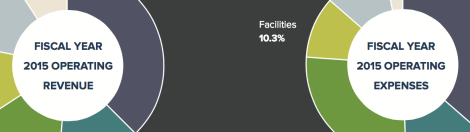
In the financial realm, the School has established long-term budgeting, rewarding departments for newly funded scientific initiatives and emphasizing our commitment to education by rewarding faculty for their teaching contributions. We are strengthening fiscal management and budgeting with an emphasis on reducing negative margins, recovering the costs of doing research projects, and building reserves at the School and department levels to create capacity for responding to future needs and opportunities. Obviously, these changes will ultimately impact the way we approach developing new resources, from seeking greater involvement from faculty and volunteers in telling our story, to reconfiguring our Advisory Councils, to focusing on our core institutional priorities--such as scholarships, tenure positions, and capital improvements, which are the backbone of the School. I look forward to working with David Woodruff, who was recently recruited from MIT as our new dean for resource development, in these endeavors.

We also recognized that our organizational structure needs to evolve in order to make the whole School greater than the sum of all its unique and exceptional parts. We have redefined the concept of School-based "centers" as multi-disciplinary and interdepartmental activities that add value to the School and, without losing any of our programs, we have reduced their number from 15 to 6. We will review the performance of these centers at least every five years, and our evaluation plan has become a model for all of Harvard University. As we move further along in the process, we expect that other significant changes will be made to streamline and enhance the School’s research and teaching activities on all levels.

Leading a complex institution in a constantly changing environment is a challenging, exciting, and enormously rewarding process. We hope that the framework we have created thus far is just the beginning of an important dialogue within the School community and beyond for thinking about what our priorities ought to be, where we want to go over the next decade, and what we hope to achieve as an institution. We hope that the process now begun will serve as a stimulus for our friends, volunteers, and wider community to help us think creatively and make wise decisions. I look forward to sharing with you our progress and soliciting your input in the months and years to come. Our faculty, students, staff, friends, and graduates are wonderful, and with their input, I believe we can set a truly exciting and productive course for the School. Improving the public's health is not something that can be done solely by a school of public health, or all schools of public health. We have to work in partnership with the world of neighbors and friends; Harvard and other universities; local, state, and federal government; the media; and international institutions. We look forward to working with you in a creative partnership in which everyone has something important to offer in improving the health of the people of this nation and the world.

©2003 Harvard School of Public Health, Office for Resource Development

contact webmaster